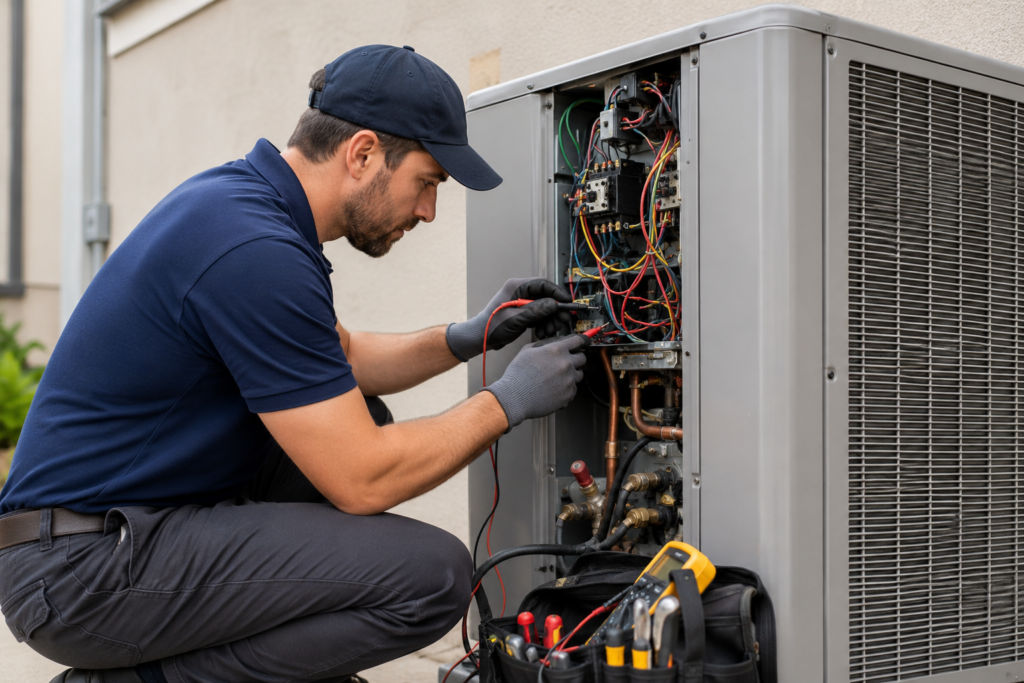
AC Installation

AC Installation Near Me

Looking for AC installation near you? HVAC Reliable Pros evaluates your home and plans a new cooling system around the property's actual requirements.

An undersized air conditioner can struggle during hot weather, while oversized equipment can create short operating cycles and inconsistent comfort. Poor duct airflow, incorrect equipment selection, and installation errors can create additional problems even when the air conditioner is new.

If you are searching for AC installation near me, HVAC Reliable Pros can help evaluate your home and plan a new cooling system around the property’s actual requirements. A professional AC installation covers cooling load, equipment capacity, indoor and outdoor components, ductwork where applicable, electrical requirements, refrigerant connections, drainage, controls, and startup testing.

What Does AC Installation Near Me Include?

Professional AC installation starts with the property rather than an equipment model. The HVAC contractor evaluates the home’s cooling requirements, existing heating and cooling equipment, electrical service, available installation locations, and air distribution system.

A central air installation can include an outdoor condenser, indoor evaporator coil, refrigerant lines, condensate drainage, thermostat controls, and connections to existing ductwork. Homes without suitable ductwork can require a different installation approach, and ductless mini split equipment can provide another option for qualifying properties.

The installation plan matches equipment capacity and configuration to the building rather than relying on a standard package for every home.
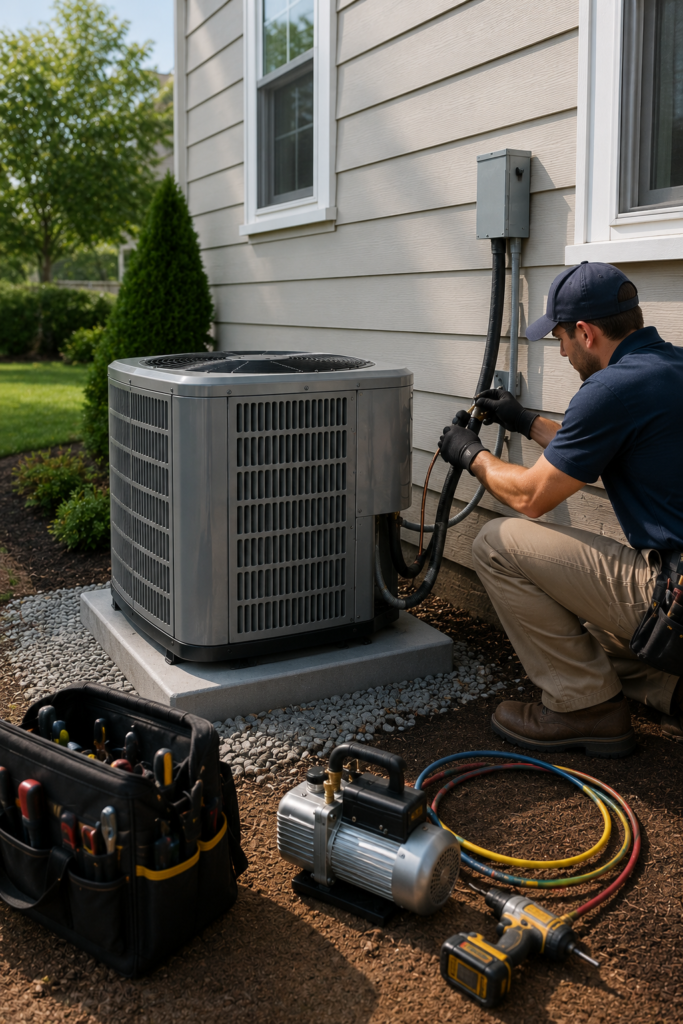
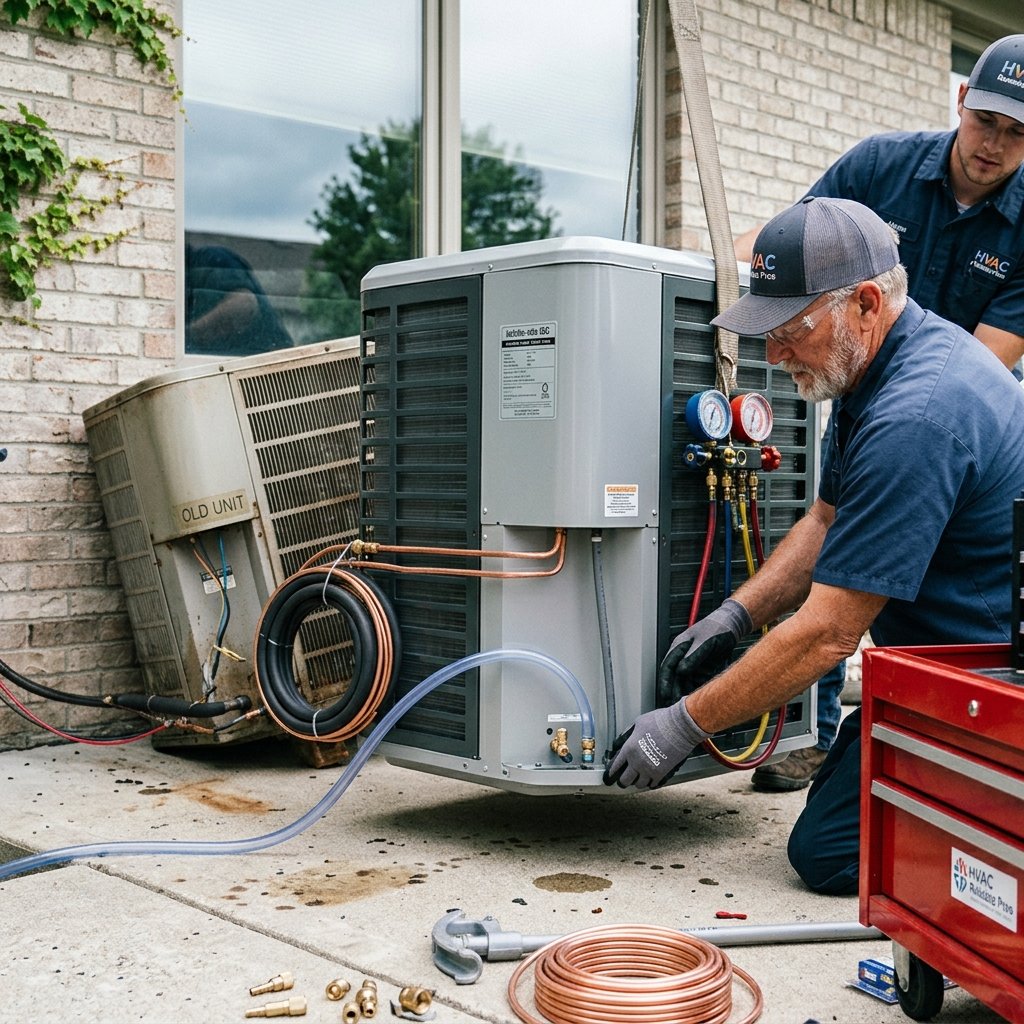
When Should You Install a New Air Conditioner?

A new AC installation can make sense when a property lacks whole home cooling or existing equipment no longer fits the home’s requirements. Common situations include a home that relies on window or portable air conditioners, a renovation that adds conditioned living space, existing cooling equipment that requires replacement, existing equipment that cannot maintain comfortable temperatures, a homeowner who wants to add central cooling to compatible forced air ductwork, and a property that requires a different cooling configuration after remodeling.

Existing cooling problems require diagnosis before equipment selection. Poor airflow, duct leakage, insulation problems, or incorrect equipment capacity can affect indoor comfort, and installing another air conditioner without identifying the underlying condition can carry the same problem into the new system.

How Local AC Installers Determine System Size

Air conditioner capacity should match the home’s calculated cooling load. HVAC contractors use a residential load calculation to account for property characteristics such as floor area, insulation, windows, orientation, air leakage, occupancy, and local outdoor conditions.

Cooling capacity commonly appears in BTUs per hour or tons. One ton of nominal air conditioning capacity equals approximately 12,000 BTUs per hour. A nominal 2 ton air conditioner represents approximately 24,000 BTUs per hour, and a nominal 3 ton unit represents approximately 36,000 BTUs per hour. Those numbers describe equipment capacity, not automatic recommendations for a particular home, so the contractor calculates the required capacity before selecting equipment.

Why Local Climate Matters for AC Installation

Cooling demand changes by location. Outdoor temperature, humidity, solar exposure, building construction, and seasonal cooling conditions affect the amount of heat that an air conditioner must remove. A home in a hot and humid climate can face different cooling and moisture control requirements from a similar size property in a milder region.

Local installation requirements can also affect equipment selection and project planning. The contractor accounts for the property’s climate conditions during the load calculation rather than selecting equipment from home size alone, which connects equipment capacity to actual cooling demand.

Choosing the Right Type of AC System

Different properties require different cooling configurations.

Central air conditioning uses an outdoor condenser and indoor cooling components to distribute conditioned air through ductwork. Our central air installation service can fit properties that already contain suitable supply and return ducts.

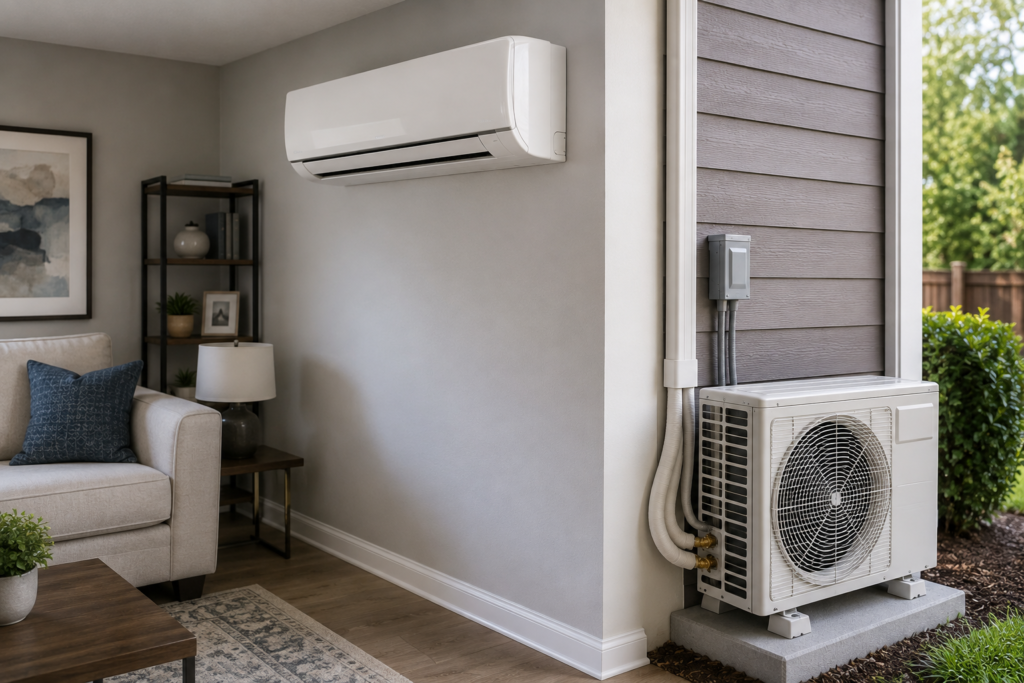
Ductless mini split equipment uses one or more indoor units connected to outdoor equipment without a conventional whole home duct network. Ductless cooling can fit additions, converted spaces, homes without existing ducts, and properties that require separate cooling zones.

Heat pump equipment can provide both cooling and heating through the refrigerant cycle. Homeowners considering replacement of both heating and cooling equipment can compare a heat pump installation with an air conditioner and separate heating system.

The contractor compares building needs before recommending one configuration.

Existing Ductwork Should Be Checked Before Installation

Central AC performance depends on the air distribution system. Supply ducts carry conditioned air to rooms, and return ducts move indoor air back toward the HVAC equipment. Restricted ducts can reduce airflow, and disconnected or leaking duct sections can lose conditioned air before cooled air reaches occupied rooms. Return airflow also matters because the blower needs a suitable path for air returning to the equipment.

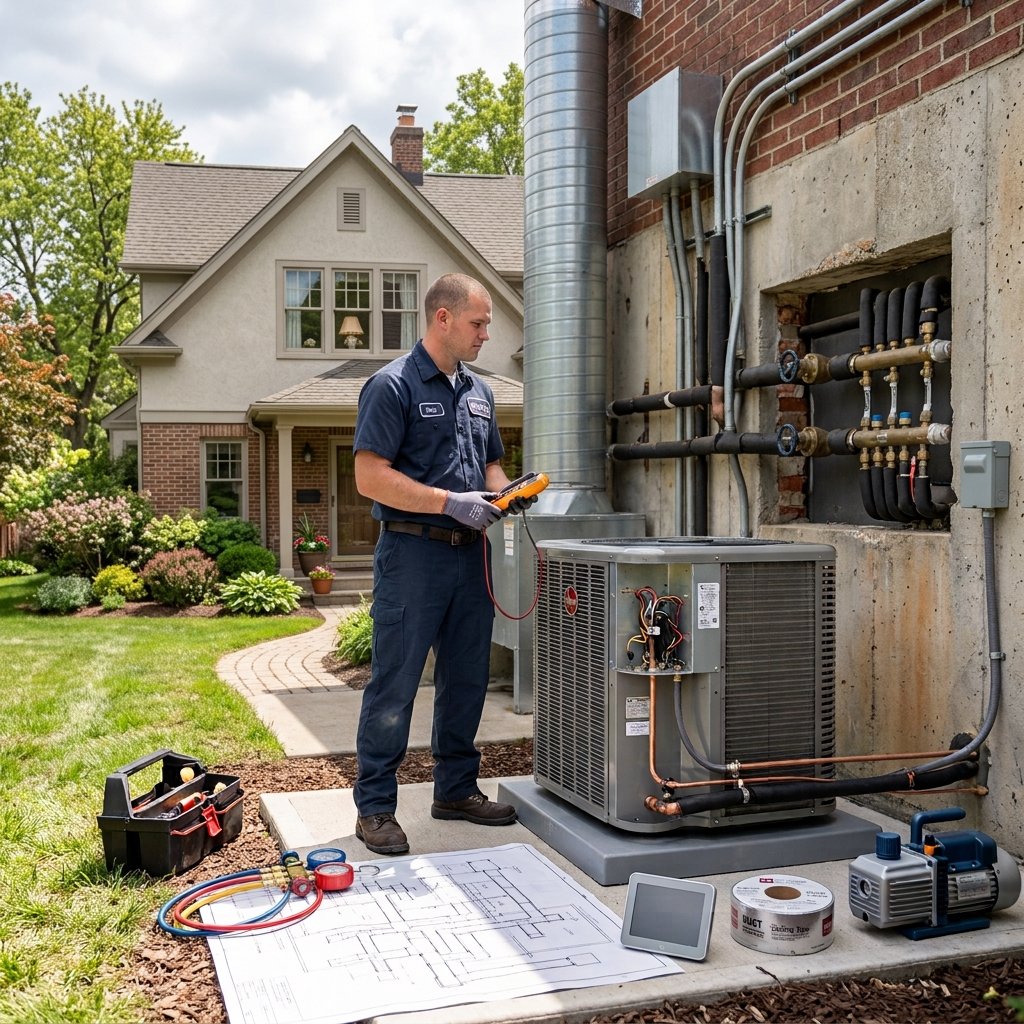
An AC installer inspects accessible ductwork and identifies airflow concerns before connecting new central cooling equipment. Suitable existing ducts can remain part of the new system, while damaged or incorrectly configured sections can require correction.

Indoor and Outdoor AC Equipment Placement

Equipment location affects airflow, service access, drainage, refrigerant routing, and installation requirements. The outdoor condenser needs a stable location with manufacturer specified clearance around the equipment, and vegetation, walls, fences, and other obstructions should not restrict required condenser airflow.

Indoor equipment requires enough access for installation and future service. The installation team also needs suitable routes for refrigerant tubing, thermostat wiring, electrical connections, and condensate drainage. A convenient location does not automatically provide a suitable equipment location, so the contractor evaluates both operation and service access.

AC Efficiency and Matched Equipment

Efficiency ratings apply to the complete qualifying equipment combination. A split central air conditioner uses indoor and outdoor components designed to operate together, and equipment matching affects certified capacity and efficiency.

SEER2 provides a seasonal cooling efficiency measurement under standardized testing conditions. Higher SEER2 values indicate greater seasonal cooling efficiency under the test procedure, but efficiency represents only one equipment selection factor. Capacity, climate, installation configuration, ductwork, controls, and project requirements also matter, so the contractor compares complete matched equipment combinations rather than choosing an outdoor condenser from one specification alone.

What to Look for in an AC Installer Near You

A local AC installation company evaluates the home before recommending equipment. Look for an installation process that includes cooling load evaluation, equipment capacity selection, existing ductwork assessment where applicable, indoor and outdoor equipment planning, refrigerant line installation, electrical connection planning, condensate drainage, thermostat and control setup, and system startup and testing.

A quote based only on home square footage can miss important property conditions. The contractor explains the proposed equipment capacity and installation scope before work begins. Property owners should also confirm applicable contractor credentials, permit requirements, equipment specifications, and warranty terms for the specific project before approving installation.

How It Works

AC Installation Process

A residential AC installation follows several core stages from assessment through startup.

  1. Property Assessment

    The contractor evaluates the home, existing HVAC equipment, cooling requirements, ductwork, electrical conditions, and equipment locations.

  2. Cooling Load Calculation

    The contractor determines the required cooling capacity from property conditions.

  3. Equipment Selection

    The contractor selects compatible equipment with capacity appropriate for the calculated load.

  4. Installation Preparation

    The installation crew prepares indoor and outdoor equipment locations and required connection routes.

  5. Equipment Installation

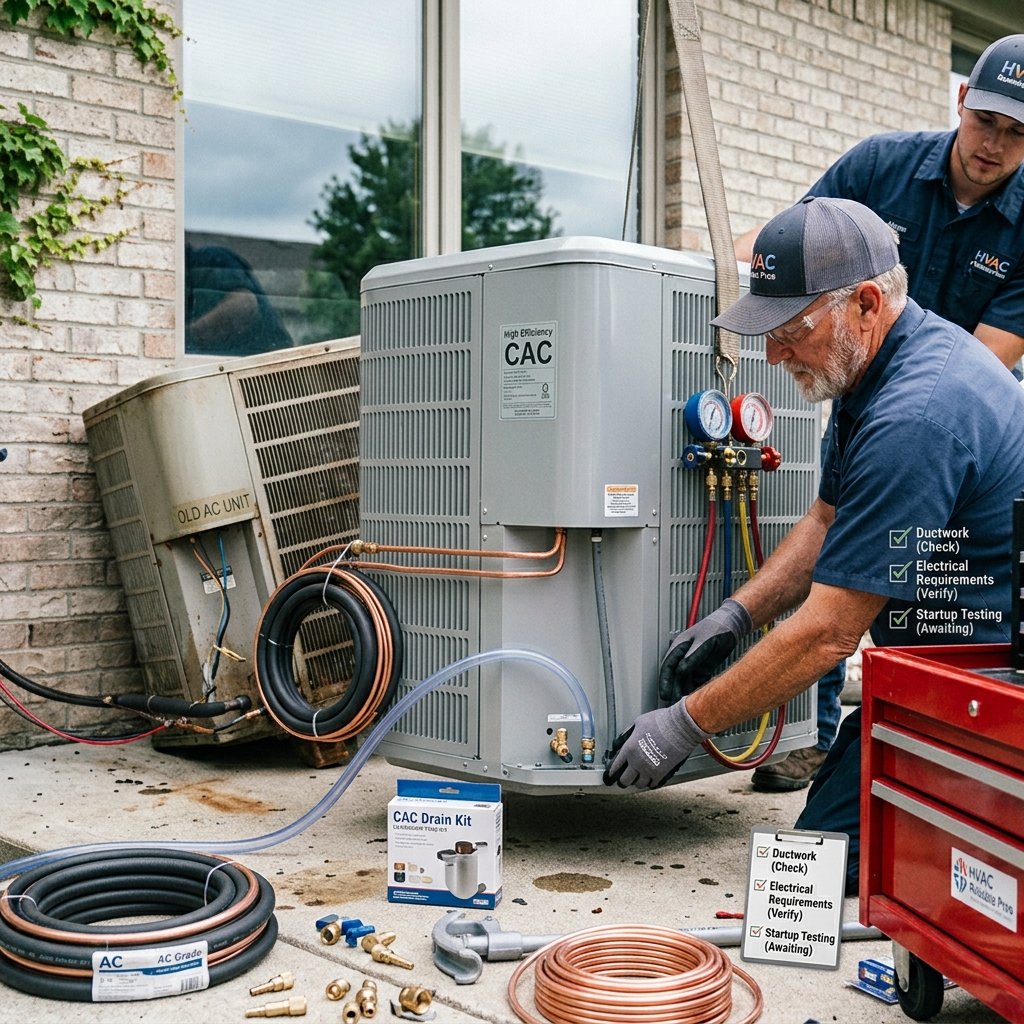
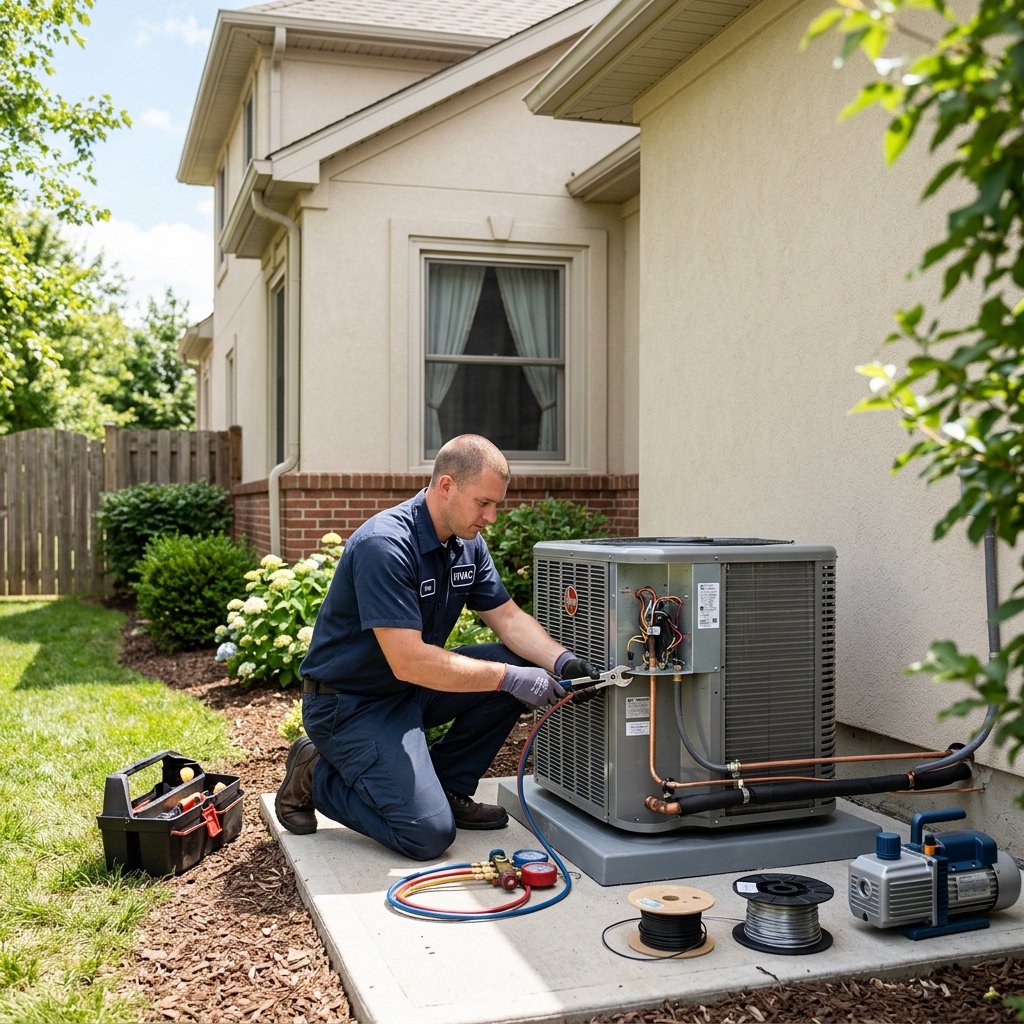
    The crew installs the condenser, indoor cooling components, refrigerant tubing, controls, drainage, and electrical connections included within the project.

  6. System Startup

    The technician starts the air conditioner and checks cooling operation, airflow, controls, drainage, and applicable operating conditions.

Real World AC Installation Example

Consider a 2,000 square foot single story home in Florida that relies on several window air conditioners. The property already contains forced air ductwork for heating, and inspection finds serviceable supply ducts but identifies insufficient return airflow in part of the home.

A cooling load calculation determines a requirement close to 36,000 BTUs per hour, equal to a nominal 3 ton cooling capacity. The contractor corrects the identified return air issue and installs a matched central air conditioning system with an outdoor condenser, indoor evaporator coil, thermostat controls, refrigerant lines, and condensate drainage.

Startup testing checks cooling operation and airflow after installation. The project demonstrates why existing infrastructure and calculated cooling demand should guide equipment selection.

How Much Does AC Installation Cost?

AC installation cost depends on the complete project rather than the outdoor unit alone. Equipment capacity and efficiency affect equipment selection, and existing ductwork can reduce or increase the installation scope depending on condition. A property without suitable ductwork can require additional air distribution work.

Electrical changes, refrigerant line routing, indoor equipment access, thermostat requirements, condensate drainage, permits, and removal of existing equipment can also affect total project cost. A property specific estimate provides more useful information than one national price applied to every home.

AC Installation Near Me Versus AC Replacement

Installation and replacement can overlap, but the project starting point differs. New AC installation can add cooling to a property without an existing central air system. AC replacement removes or changes existing cooling equipment and installs new equipment within the property.

Replacement requires evaluation of the existing system, including equipment compatibility, ductwork, electrical components, refrigerant lines, and controls. Homeowners with an existing air conditioner can review our residential AC installation service for equipment options.

Our Services

Explore HVAC Reliable Pros Cooling Services

Compare our available cooling and heating installation services.

FAQ

Frequently Asked Questions About AC Installation Near Me

How do I find an AC installer near me?

Look for an HVAC contractor that evaluates the property before recommending equipment. The installation process should cover cooling load, equipment sizing, ductwork where applicable, electrical requirements, drainage, and startup testing.

What size AC unit does my home need?

A cooling load calculation should determine capacity. Floor area, insulation, windows, air leakage, orientation, occupancy, and local climate can affect cooling demand.

Can a new AC use existing ductwork?

Yes, when existing supply and return ducts support the required airflow and remain in suitable condition. The contractor inspects accessible ductwork before installation.

Is a bigger AC unit better?

No. Equipment capacity should match the calculated cooling load. Oversized and undersized equipment can both create comfort and operating problems.

Can I install central air in a house without AC?

Yes, depending on the property. Homes with suitable existing ductwork can support central air installation more directly, while homes without ducts can require new ductwork or another cooling option.

Does AC installation include a new thermostat?

Thermostat requirements depend on the selected equipment and existing controls. The contractor confirms thermostat compatibility and includes required control changes within the installation scope.

Schedule AC Installation Near You

Correct AC installation starts with the home's cooling requirements. HVAC Reliable Pros helps homeowners evaluate cooling needs and plan air conditioner installation around the property.

  • Cooling load calculated before equipment is selected
  • Matched indoor and outdoor equipment
  • Complete startup and airflow testing
Get a Free Estimate

Leave a Reply

Your email address will not be published. Required fields are marked *