Installation Timeline

How Long Does HVAC Installation Take?

Most HVAC replacements take 4 to 10 hours, while complex installations can take 2 to 3 days or longer. See the complete HVAC installation timeline.

A standard residential HVAC replacement usually takes about 4 to 10 hours and often finishes within one working day. A more involved installation with new ductwork, electrical upgrades, zoning, difficult equipment access, or major system changes can take 2 to 3 days or longer.

Replacing existing equipment generally takes less time than installing an HVAC system in a home without suitable heating, cooling, or duct infrastructure. System type, property layout, existing equipment, duct condition, electrical requirements, permits, and installation access all affect the schedule.

The physical installation also represents only one part of the project. Equipment selection, load calculations, permit requirements, scheduling, inspections, and system testing can extend the overall timeline from the first assessment to final completion.

HVAC Installation Timeline at a Glance

Most straightforward replacement projects require one working day, while installations that change the existing HVAC infrastructure need additional time.

HVAC Installation Timeline at a Glance

HVAC Project Typical Installation Time
AC replacement About 4 to 8 hours
Standard HVAC replacement About 4 to 10 hours
Furnace replacement About 4 to 8 hours
Heat pump replacement About 4 to 8 hours
Full system with minor modifications About 1 to 2 days
HVAC with substantial ductwork About 2 to 3 days or longer
First time central HVAC installation About 2 to 5 days or longer
Major duct replacement About 1 to 3 additional days

These timelines provide planning estimates rather than guaranteed completion times. Property conditions can change the schedule after technicians inspect existing equipment and infrastructure.

Why Does HVAC Installation Time Vary?

HVAC installation involves more than placing new equipment in a home. The contractor must connect the heating and cooling equipment to electrical service, controls, refrigerant lines, drainage, gas service where applicable, and the air distribution system.

A direct replacement can move quickly when existing infrastructure supports the new equipment. A project takes longer when technicians need to correct duct problems, modify electrical infrastructure, relocate equipment, install new refrigerant tubing, or change the system configuration.

Equipment access also matters. A system located in an open garage or mechanical room usually provides easier working conditions than equipment located in a tight attic or crawl space.

Replacement Versus New HVAC Installation

A replacement usually takes less time than a first time installation because the home already contains much of the required infrastructure.

During a straightforward replacement, technicians can often use suitable equipment locations, duct connections, electrical infrastructure, drainage routes, and other compatible components. The crew removes the old equipment and prepares the existing locations for the new system.

A first time installation can require new ducts, electrical circuits, refrigerant tubing, condensate drainage, equipment supports, supply registers, return pathways, thermostat wiring, and other building modifications. These additional steps can extend a first time central HVAC installation to several days. Our new HVAC system cost guide covers what a first time installation typically costs.

What Happens Before HVAC Installation Day?

Several important steps happen before technicians begin removing equipment.

Home and system assessment: the contractor first evaluates the existing HVAC system and the areas that the new equipment will serve. The assessment can include existing equipment condition, conditioned floor area, insulation, windows, equipment locations, electrical infrastructure, ductwork, thermostat configuration, and heating and cooling requirements. The contractor also identifies installation conditions that could affect the schedule.

Heating and cooling load calculation: equipment capacity should match the home’s calculated heating and cooling demand. A residential load calculation considers factors such as conditioned square footage, climate, insulation, windows, air leakage, orientation, ceiling height, and other building characteristics. The contractor uses the results to guide equipment selection instead of automatically replacing the existing system with the same tonnage. Our HVAC sizing guide and tonnage calculator cover this step in more detail.

Equipment selection: after determining capacity requirements, the contractor selects an appropriate HVAC configuration. The property may use a central AC and furnace, heat pump, air handler, ductless system, or another suitable configuration. Equipment availability and compatible indoor and outdoor components can affect scheduling before installation day.

Permit requirements: some HVAC installations require mechanical, electrical, building, or other local permits. Requirements differ by city, county, state, equipment type, and project scope. Permit processing can affect the overall project schedule even when the physical installation takes only one day. The contractor identifies applicable requirements before work begins.

Installation Day

What Happens on HVAC Installation Day?

A typical installation follows a sequence that protects the property, removes existing equipment, installs new components, connects the system, and verifies operation.

  1. Prepare the Work Area

    The installation team prepares access to indoor and outdoor equipment, protects nearby floors and surfaces, and confirms the planned installation locations before disconnecting the existing system.

  2. Disconnect and Remove Old Equipment

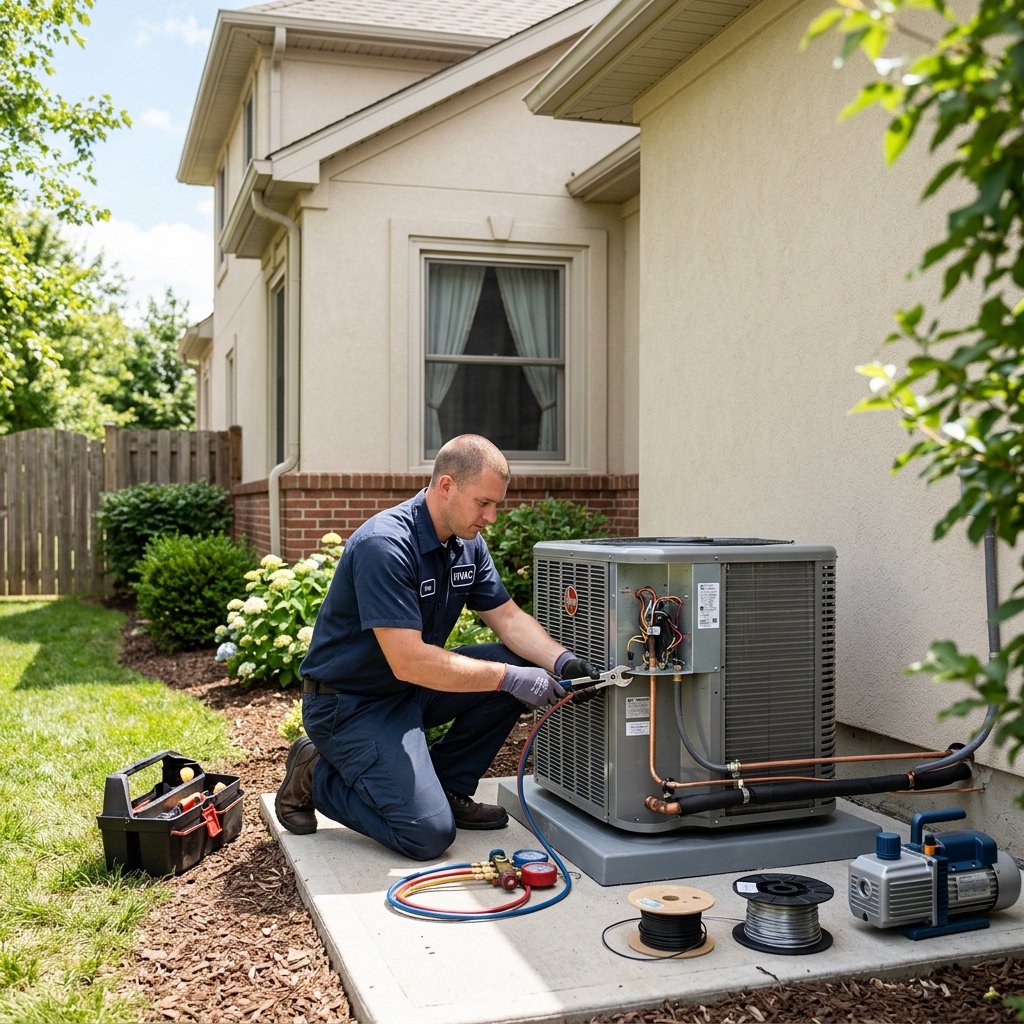
    The crew shuts down the existing HVAC system and disconnects the outdoor condenser or heat pump, indoor coil, furnace, air handler, thermostat, and other replaced components using appropriate refrigerant handling procedures.

  3. Prepare Equipment Locations

    The crew adjusts equipment supports, connections, transitions, drainage, refrigerant routes, or clearances when the new equipment differs from the previous configuration.

  4. Install the Indoor and Outdoor Equipment

    Technicians position the new outdoor and indoor components according to the planned system configuration, supporting service access, airflow, drainage, and system connections.

  5. Complete Refrigerant Connections

    The installation team connects compatible refrigerant lines and completes the procedures required for the selected equipment, reusing existing tubing when condition and routing support continued use.

  6. Connect Electrical Components and Controls

    Technicians connect required controls and verify the system's electrical requirements, completing any circuit, breaker, disconnect, wiring, or control changes needed for the new equipment.

  7. Connect the Duct System

    The crew connects the new indoor equipment to the existing air distribution system and completes planned transitions or modifications, addressing accessible connection problems within scope.

  8. Complete Drainage Connections

    The installation team connects the condensate drainage system and verifies that water can leave the equipment correctly.

  9. Start and Test the System

    The crew starts the HVAC system and checks thermostat operation, airflow, temperature response, refrigerant system operation, drainage, electrical operation, and equipment controls before completing the project.

How Long Does AC Replacement Take?

A straightforward central AC replacement commonly takes about 4 to 8 hours when the existing infrastructure supports the new equipment. Replacing both indoor and outdoor components can take longer than replacing a smaller portion of the system. Refrigerant line changes, indoor coil modifications, electrical work, duct corrections, or difficult equipment access can extend the project. Homes without existing central air require considerably more work than direct replacements.

How Long Does a Furnace Replacement Take?

A straightforward furnace replacement can often finish in about 4 to 8 hours. The timeline can increase when the new furnace requires duct transitions, venting changes, gas line modifications, electrical work, condensate drainage, or control changes. Replacing both the furnace and central AC equipment creates a larger project than replacing the furnace alone.

How Long Does Heat Pump Installation Take?

A straightforward heat pump replacement commonly takes approximately 4 to 8 hours, although full system changes can require a full day or longer. Heat pump installation includes outdoor and indoor equipment connections, refrigerant tubing, electrical work, drainage, controls, and system testing. A dual fuel configuration, major electrical changes, duct modifications, or a conversion from another heating system can extend the schedule. Our mini split AC system service covers the ductless side of installation scheduling.

How Long Does HVAC Installation Take With New Ductwork?

Ductwork can turn a one day HVAC replacement into a multi day project. A professional crew can require approximately 1 to 3 days or more for substantial duct replacement, depending on home size, duct layout, accessibility, and project scope.

Attic and crawl space installations can require additional labor because technicians need to work within restricted areas. New return pathways, multiple floors, difficult framing conditions, and extensive duct routes can also increase installation time. The contractor should inspect accessible ductwork before installation day so the project schedule accounts for required modifications.

How Electrical Work Affects the Timeline

A replacement can move quickly when existing electrical infrastructure supports the selected equipment. Different equipment requirements can create a need for new circuits, wiring, breakers, disconnects, or other electrical modifications. A conversion from certain fuel burning heating systems to electric equipment can also create additional electrical requirements.

The contractor evaluates electrical capacity before installation begins. Discovering an electrical limitation during installation can delay completion, especially when the project requires additional electrical work outside the original scope.

Does Equipment Location Affect Installation Time?

Yes. Equipment access can change the amount of labor required. Ground level outdoor equipment and accessible mechanical rooms usually allow technicians to move components more easily. Tight attics, crawl spaces, closets, rooftops, and restricted side yards can make equipment removal and installation more difficult.

Large equipment can also require additional planning when doorways, stairs, attic openings, or other access points restrict movement. The contractor evaluates access during the pre installation assessment.

Can Weather Delay HVAC Installation?

Weather can affect outdoor portions of HVAC installation. Heavy rain, thunderstorms, snow, high winds, or other unsafe conditions can interrupt outdoor work. Equipment installation, electrical connections, refrigerant work, and rooftop access can require suitable working conditions. Weather delays do not affect every project, but homeowners should allow some scheduling flexibility during severe conditions.

Can HVAC Installation Take More Than One Day?

Yes. A multi day installation does not automatically indicate a problem. Projects commonly extend beyond one day when the scope includes extensive ductwork replacement, major electrical modifications, equipment relocation, zoning changes, first time central HVAC installation, difficult attic or crawl space access, multiple HVAC systems, structural modifications, or unexpected existing system problems. A detailed pre installation inspection helps identify many of these conditions before work starts.

Do Permits and Inspections Add Installation Time?

Permits and inspections can affect the overall project timeline even when the physical equipment installation takes one day. Local jurisdictions establish different requirements for HVAC, electrical, gas, and mechanical work. Some jurisdictions require inspections at specific stages or after installation.

The contractor accounts for local requirements when estimating the complete project schedule. Homeowners should distinguish installation time from total project time. A crew can complete physical installation in several hours even when permitting, scheduling, and inspection steps span additional days.

How to Prepare for HVAC Installation Day

Homeowners can help prevent avoidable delays by preparing the work areas before the crew arrives. Clear a path between the entrance and indoor HVAC equipment. Remove objects surrounding the furnace, air handler, thermostat, electrical panel, and outdoor equipment.

Secure pets away from work areas and keep vehicles away from locations the installation crew may need for equipment unloading. The contractor can provide project specific preparation instructions before installation day.

Will the Home Be Without Heating or Cooling During Installation?

Yes. The existing system normally needs to remain off while technicians remove old equipment and connect the replacement. For a standard one day project, the home can remain without heating or cooling for several hours. Multi day projects can create a longer interruption depending on installation sequence and system configuration.

Homeowners should plan around indoor temperatures when scheduling replacement during very hot or cold weather.

What Can Cause an HVAC Installation Delay?

Unexpected property conditions create some of the most common installation delays. A crew can discover damaged ducts, inadequate return airflow, electrical limitations, deteriorated equipment supports, drainage problems, inaccessible components, or incompatible existing infrastructure after work begins.

Equipment availability, permit requirements, inspections, and severe weather can also affect the broader schedule. A thorough assessment before installation reduces surprises but cannot identify every concealed condition.

Real World HVAC Installation Timeline Example

Consider a 2,200 square foot home in Ohio with an aging furnace and central AC system. The homeowner wants to replace both systems while keeping serviceable existing ductwork.

Before installation, the contractor evaluates the heating and cooling loads, checks equipment compatibility, inspects accessible supply and return ducts, reviews electrical infrastructure, and examines the existing equipment locations.

On installation day, the crew removes the old furnace, indoor coil, and outdoor condenser. Technicians install the replacement equipment, complete duct transitions, connect refrigerant tubing, connect electrical components and controls, complete drainage connections, and start the system.

The existing ducts and equipment locations require only minor modifications, so the physical installation can fit within approximately one full working day. If the same home required substantial duct replacement or major electrical changes, the project could extend to 2 to 3 days or longer.

How to Know Whether Your Installation Will Take One Day or Several Days

The installation estimate should identify more than equipment type and price. Homeowners should also ask what work the contractor expects to complete.

A straightforward equipment changeout with compatible ducts, electrical infrastructure, refrigerant routing, drainage, and equipment locations has the best chance of finishing within one day. A project that changes several parts of the home’s HVAC infrastructure needs more time.

Ask the contractor about expected installation duration, duct modifications, electrical work, permit requirements, equipment removal, thermostat changes, testing, and any work that could continue into another day.

What Happens After HVAC Installation?

The contractor verifies system operation after completing the physical installation. Testing can include thermostat response, airflow, heating or cooling operation, electrical components, condensate drainage, controls, and other equipment specific checks.

The homeowner should also receive basic operating information for the new system and thermostat. Any required local inspection can occur according to the jurisdiction’s process. Our HVAC installation cost guide and AC installation cost guide cover pricing for these projects in more detail.

Areas We Serve

HVAC Reliable Pros provides HVAC installation and replacement across available service areas in California, Florida, Ohio, and Washington. HVAC Reliable Pros can evaluate central AC systems, furnaces, heat pumps, ductless equipment, ductwork, equipment sizing, and installation requirements.

Service availability varies by city, county, and ZIP code. Call (866) 280 1324 to confirm HVAC installation availability and request a free estimate.

Our Services

Explore HVAC Reliable Pros Installation Services

Compare our available heating and cooling installation and replacement services.

FAQ

Frequently Asked Questions

Can HVAC installation be completed in one day?

Yes. Many straightforward residential HVAC replacements can finish within one working day when existing ductwork, electrical infrastructure, equipment locations, and other components support the new system. More extensive modifications can require additional days.

How long does it take to replace an AC unit?

A standard central AC replacement commonly takes approximately 4 to 8 hours. Duct modifications, electrical work, difficult access, refrigerant line changes, or a larger replacement scope can increase installation time.

How long does a full furnace and AC replacement take?

A furnace and AC replacement can often take one full working day, although project complexity can extend the installation into a second day. Ductwork, venting, electrical changes, equipment access, and controls affect the schedule.

How long does heat pump installation take?

A straightforward heat pump replacement commonly takes around 4 to 8 hours. A conversion, dual fuel configuration, new ductwork, electrical upgrades, or other system changes can extend the installation.

How long does HVAC installation take with new ductwork?

An HVAC installation with substantial new ductwork can take approximately 2 to 3 days or longer. Home size, duct layout, attic or crawl space access, return air requirements, and the amount of duct replacement affect the timeline.

Do I need to leave my house during HVAC installation?

Homeowners can often remain at home during a standard HVAC installation, although the heating or cooling system will remain off for part of the project. Noise, technician access, indoor temperature, pets, and individual property conditions can influence the homeowner's decision.

Schedule Your HVAC Installation

A standard HVAC replacement usually takes approximately 4 to 10 hours, and many straightforward projects finish within one working day. A pre installation assessment allows the contractor to identify system requirements and provide a more accurate project timeline.

  • Pre installation assessment identifies ductwork and electrical needs
  • Written timeline before work begins
  • Complete testing before the crew leaves
Get a Free Estimate

Leave a Reply

Your email address will not be published. Required fields are marked *