What Affects the Price of Central Air Installation?
1. Existing vs. New Ductwork
New ductwork costs approximately $3,000-$7,500 for around 300 linear feet.
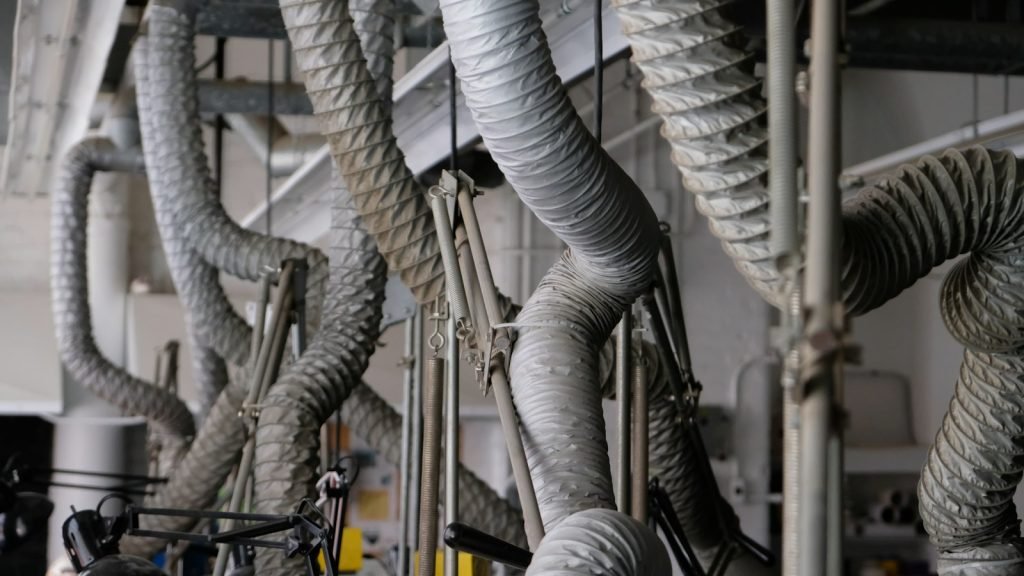
Existing ducts can reduce installation scope when supply and return airflow, sizing, insulation, and sealing meet the requirements of the new central AC system. Supply-air capacity, return-air capacity, and duct sizing determine whether existing ducts support the new system.
A 300-linear-foot duct system represents a different project cost when the duct network already exists compared with installing 300 linear feet of new supply and return runs.
Duct insulation also affects cooling performance. R-8 insulation provides an insulation value of approximately R-8, reducing heat transfer through supply ducts located in unconditioned attic spaces. A properly sealed residential duct system can target leakage of approximately 5% or less of total system airflow, depending on the applicable standard and testing method.
Leaking or restricted ducts may require sealing, insulation, repairs, balancing, resizing, or replacement.
2. Installation Labor
Professional central AC installation can cost approximately $3,500-$7,000.
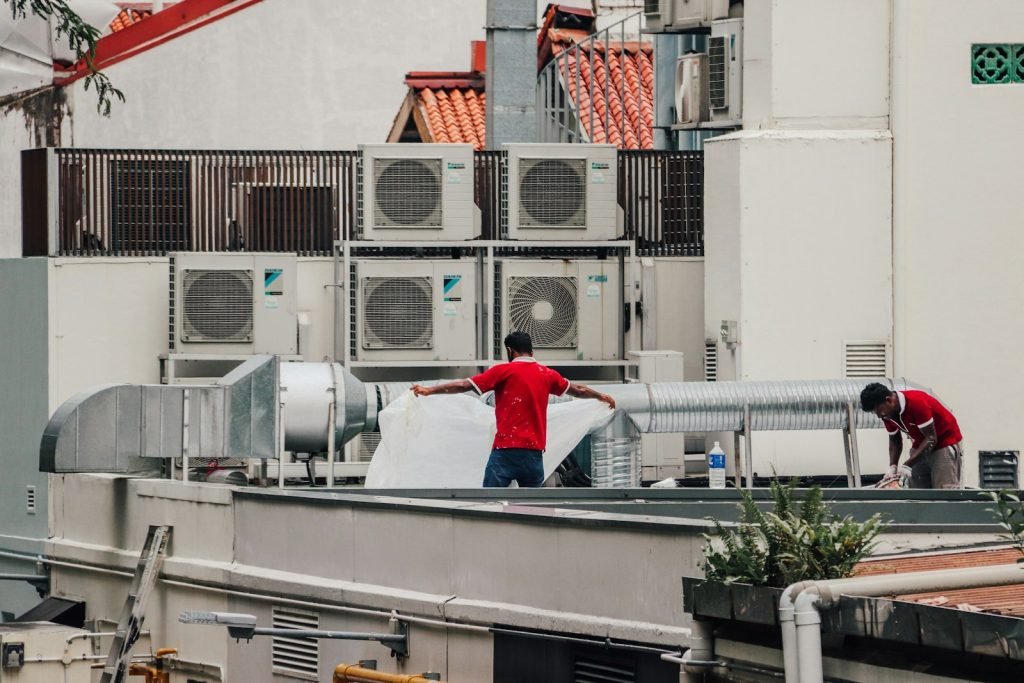
Installation labor includes condenser placement, evaporator-coil connections, refrigerant-line work, electrical connections, condensate drainage, thermostat controls, startup, and system commissioning.
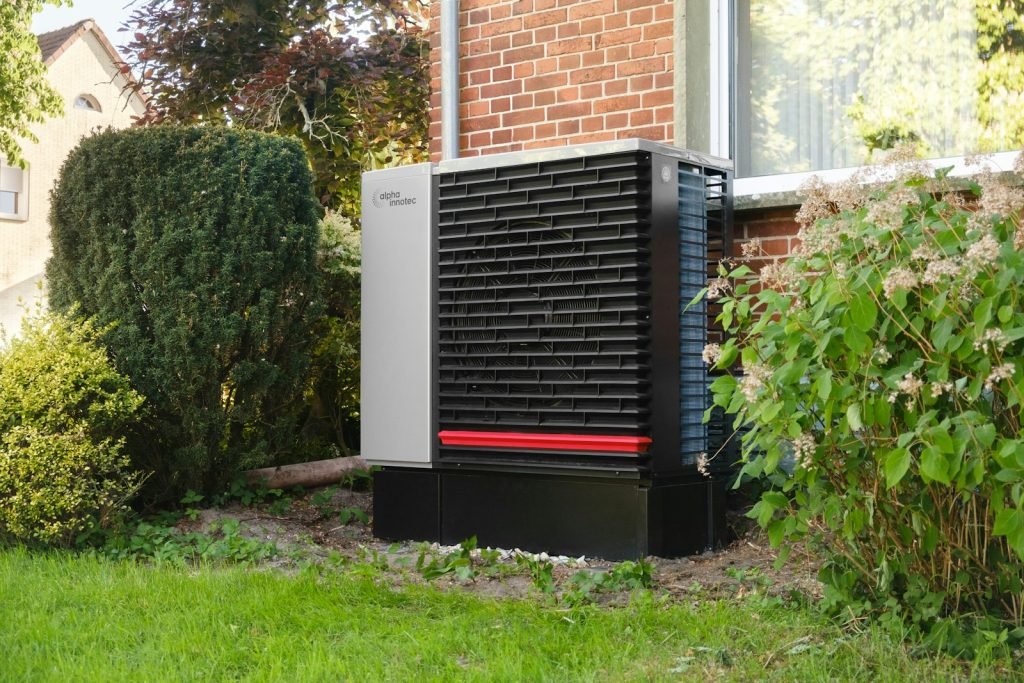
A 3-ton condenser commonly weighs around 180-220 pounds, although actual weight varies by model. A concrete or composite equipment pad provides a level outdoor mounting surface, while refrigerant lines connect the outdoor condenser to the indoor evaporator coil.
A ground-level condenser beside an exterior wall reduces equipment-handling labor compared with a rooftop placement. Attic installations, crawl-space work, long refrigerant-line runs, and restricted access can increase technician time.
3. SEER2 Efficiency
SEER2 measures seasonal air-conditioning efficiency under standardized testing conditions.
A 16-SEER2 condenser carries a seasonal efficiency rating of approximately 16, while a higher-SEER2 condenser generally uses less electricity for the same cooling output under comparable operating conditions. Electricity rates, annual cooling hours, equipment cost, and expected ownership period determine whether a higher-efficiency condenser provides an acceptable return.
For example, a 16-SEER2 condenser rated at 36,000 BTUs represents a 3-ton system, while a 20-SEER2 condenser with the same nominal 36,000-BTU capacity provides the same rated cooling capacity with a higher seasonal efficiency rating.
A higher-SEER2 condenser generally carries a higher purchase price but can reduce electricity consumption during operation.
4. Compressor Technology
Compressor design affects cooling capacity control, temperature consistency, humidity management, and equipment cost.
- Single-stage: Operates primarily at one cooling capacity.
- Two-stage: Provides two operating capacity levels.
- Variable-speed: Adjusts compressor output across a wider operating range.
A single-stage compressor typically operates at approximately 100% of rated capacity when running. A two-stage compressor provides a lower-capacity stage and a higher-capacity stage, although exact percentages vary by model. A variable-speed compressor can modulate output across a range such as approximately 25% to 100% of rated capacity, depending on manufacturer design.
Variable-speed compressors can provide longer, lower-capacity cycles and more consistent temperature control when the compressor, evaporator coil, blower, thermostat, and ductwork operate as a matched system.