Financing

AC Financing

AC financing helps homeowners spread the cost of a new air conditioner across monthly payments instead of paying the entire installation cost upfront. Financing can cover central AC installation, AC replacement, equipment upgrades, and related installation work.

AC financing provides funds for air conditioning installation or replacement and allows the homeowner to repay the balance over an agreed period. Financing can come through HVAC contractors, banks, credit unions, online lenders, credit cards, or home equity products.

Each financing option uses different approval requirements, repayment periods, fees, and interest structures. Comparing the total repayment amount helps homeowners understand the actual cost before accepting an agreement.

How Much Does a New AC Unit Cost?

Central air installation commonly costs about $3,900 to $7,900, with many residential projects averaging close to $5,900. Equipment capacity, efficiency, duct condition, electrical requirements, and installation complexity can move the final price higher or lower.

AC replacement can also require thermostat upgrades, refrigerant lines, drainage work, electrical changes, or duct repairs. A professional estimate establishes the amount that may need financing before the homeowner applies for credit.

AC Financing Options

Financing Option Best For
Contractor Financing Reviewing financing while arranging an installation estimate
Personal Loans A fixed amount with predictable monthly payments
Credit Cards Smaller projects or balances paid off quickly
Home Equity Loans A fixed amount backed by available property equity
Home Equity Lines of Credit Drawing only the amount required for the project

Contractor Financing

Many HVAC contractors work with third party lenders that provide home improvement financing. Contractor financing can simplify the process because homeowners can review financing while arranging an AC installation or replacement.

Available terms depend on the lender and applicant qualification. Financing programs can include fixed monthly payments, standard installment loans, or promotional financing periods.

Personal Loans

A personal loan provides a fixed amount that homeowners can use toward a new air conditioning system. Banks, credit unions, and online lenders commonly provide unsecured personal loans.

Rates depend on credit history, income, debt obligations, requested amount, and repayment term. Fixed rate loans provide a predictable payment schedule throughout the repayment period.

Credit Cards

Credit cards can cover part or all of an AC project when the available credit limit is sufficient. Some cards include introductory promotional periods that can reduce short term borrowing costs.

Standard credit card rates can become expensive when a large balance remains unpaid after a promotional period. Homeowners should calculate the expected payoff date before using revolving credit for a full AC replacement.

Home Equity Loans

A home equity loan allows qualifying homeowners to borrow against available property equity. Home equity loans commonly provide a fixed amount with scheduled monthly payments.

The property secures the financing, which creates additional risk compared with unsecured borrowing. Closing costs, repayment conditions, and total interest should receive careful review.

Home Equity Lines of Credit

A home equity line of credit provides access to a revolving credit limit based partly on available home equity. A homeowner can draw only the amount required for the AC project.

Interest rates may vary during repayment depending on the agreement. Homeowners should review rate structure, fees, draw periods, and repayment conditions before using home equity.

How AC Financing Works
How It Works

How AC Financing Works

The financing process normally starts with an AC inspection and installation estimate. The estimate gives the homeowner a realistic project amount before any financing application begins.

  1. Get an AC Estimate

    An HVAC contractor evaluates the property, existing system, ductwork, electrical supply, and cooling requirements, then provides a project estimate identifying equipment and labor costs.

  2. Compare Financing Offers

    Compare annual percentage rate, repayment length, financing fees, promotional terms, total repayment cost, and early payment conditions.

  3. Submit the Application

    Most lenders request identification, income details, housing information, and permission to review credit history. Requirements differ between financing companies and loan products.

  4. Schedule AC Installation

    Approved financing allows the homeowner and contractor to schedule installation. Payment can go directly to the HVAC company or through another arrangement depending on the lender.

AC Financing Requirements

Every lender establishes separate approval rules. No universal credit score or income level guarantees approval for AC financing. Lenders commonly consider:

Credit history: lenders review past repayment behavior to gauge overall reliability.

Credit score: a higher score commonly supports access to more competitive rates and terms.

Monthly income: lenders use income to assess the ability to repay the financing amount.

Existing debt: current debt obligations affect how much new financing a lender may approve.

Employment or income stability: a steady income history can support financing approval.

Requested financing amount: the amount sought should match the actual project cost.

Housing costs: existing housing expenses can factor into certain financing products.

Repayment term: a longer or shorter term affects the monthly payment and total interest paid.

Some lenders also calculate debt to income ratio. A high level of existing monthly debt can reduce the amount available for a new loan.

AC Financing With Bad Credit

Homeowners with lower credit scores may still qualify for some AC financing programs. Financing terms can include higher rates, smaller loan limits, or shorter repayment periods.

Comparing several offers becomes particularly important when credit history limits available options. Small differences in borrowing cost can create a much larger difference over several years of repayment.

A larger down payment can also reduce the amount financed. Financing a smaller balance may improve affordability and lower the total amount of interest paid.

Monthly Payments for a New AC

Monthly AC payments depend on the project cost, amount financed, interest rate, and repayment period. A longer term generally reduces the required monthly payment but can increase total borrowing cost.

For example, financing a $6,000 project over a shorter period requires larger monthly payments than financing the same amount over several additional years. The applicable interest rate also changes the final cost.

Homeowners should select a repayment amount that fits the household budget while still considering total repayment.

Zero Interest AC Financing

Some financing providers advertise zero interest or promotional financing for qualifying customers. Promotional terms can reduce borrowing costs when the balance receives full payment within the required period.

Homeowners should determine whether the offer uses true zero interest or deferred interest. A deferred interest agreement can add interest according to contract terms when the balance remains after the promotional deadline.

The financing disclosure provides the most important information. Homeowners should review the annual percentage rate, promotional expiration date, minimum payment, and deferred interest conditions.

Financing AC Replacement

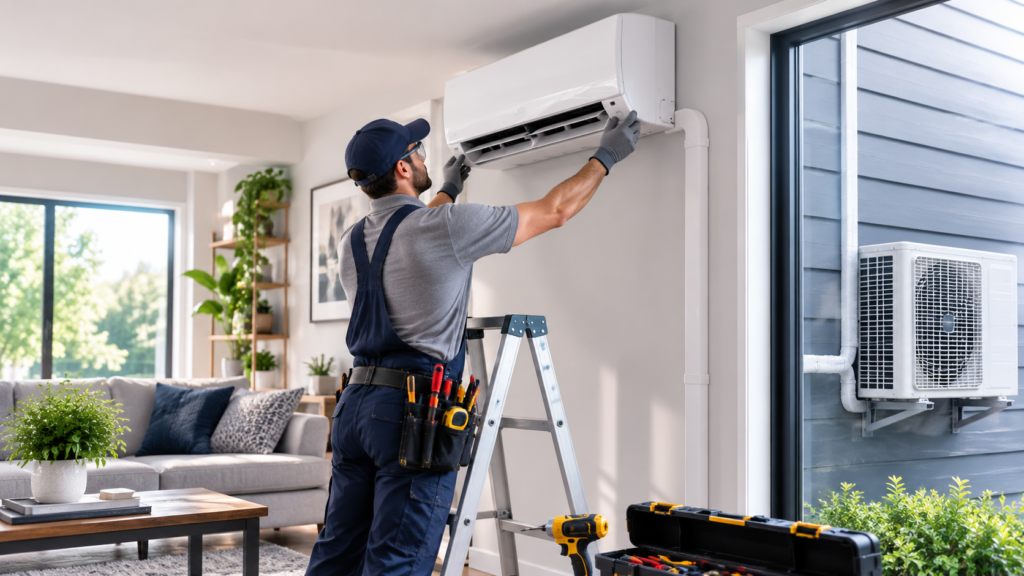
AC replacement becomes necessary when an aging system develops expensive problems or can no longer provide reliable cooling. Financing can make replacement possible without using the entire project amount from household savings.

Replacement projects can include the outdoor condenser, indoor coil, air handler, thermostat, refrigerant lines, electrical work, and related installation labor.

Homeowners can review the Central Air Replacement Services page and AC Unit Replacement Cost Guide before comparing financing options.

Financing New AC Installation

A home without central cooling can require additional work beyond the AC equipment itself. New installation can include ductwork, electrical circuits, condensate drainage, refrigerant lines, equipment pads, and thermostat wiring.

These additions can increase the amount required for financing. A detailed site assessment should establish the complete installation scope before the homeowner chooses a loan amount.

Homeowners planning a new system can review the Central Air Installation Services and AC Installation Cost Guide pages.

Should You Finance or Pay Cash?

Cash avoids loan interest and financing fees. Paying cash can therefore produce a lower total project cost when adequate savings remain available after the purchase.

Financing allows homeowners to preserve cash for other expenses and divide the AC cost into scheduled payments. This option can be especially useful when an air conditioner fails unexpectedly during hot weather.

The right choice depends on savings, available financing rates, emergency reserves, project urgency, and monthly household expenses.

Down Payments

A down payment reduces the amount that requires financing. A homeowner financing a $7,000 installation after paying $2,000 upfront only needs financing for the remaining $5,000.

A smaller loan balance can reduce monthly payments and total interest. Some financing programs require no down payment, while others may set minimum upfront payment requirements.

Homeowners should confirm lender conditions before assuming that a down payment is required or optional.

AC Financing and Rebates

Air conditioning equipment may qualify for utility rebates, manufacturer promotions, or other incentives depending on equipment efficiency and location. Program availability changes by region and year.

A rebate can reduce the final project cost and therefore reduce the amount that requires financing. Homeowners should verify qualification requirements before purchasing equipment because some programs require specific efficiency ratings or approved installation conditions.

Tax credits and rebate programs also use separate eligibility rules. Homeowners should confirm current requirements directly with the program administrator or a qualified tax professional.

What Can AC Financing Cover?

Financing programs can potentially cover most costs directly connected to an approved air conditioning installation. Eligibility depends on the lender and contractor arrangement. Common project expenses include:

Central AC equipment: the outdoor condenser and related core cooling equipment.

Indoor evaporator coil: the component that works with the condenser to cool indoor air.

Air handler: the indoor unit that circulates conditioned air through the home.

Thermostat: controls used to manage system operation and temperature settings.

Refrigerant lines: the connections between indoor and outdoor equipment.

Installation labor: the work required to install and connect the new system.

Electrical upgrades: wiring or panel work needed to support the new equipment.

Drainage improvements: condensate drainage work required for proper system operation.

Duct repairs: fixes to existing ductwork needed for correct airflow.

Equipment removal: removal of the old system as part of a replacement project.

Permit related expenses: local permit and inspection costs tied to the installation.

The financing agreement should state the approved amount and identify how project payments work.

Questions to Ask Before Financing

Every homeowner should review financing terms before signing an agreement. Promotional language should not replace the actual loan disclosure. Important questions include:

What is the annual percentage rate?

What will the monthly payment be?

How many payments are required?

What is the total repayment amount?

Does the loan include an origination fee?

Is the interest rate fixed?

Does a promotional period use deferred interest?

Can the balance receive early repayment?

Does early repayment create a penalty?

When does the first payment become due?

What happens after a missed payment?

Clear answers make comparison between lenders easier.

How to Lower AC Financing Costs

Reducing the amount borrowed can lower both monthly payments and total interest. Homeowners should establish the required equipment and project scope before adding optional upgrades.

Compare multiple AC estimates: helps confirm reasonable pricing before committing to a loan amount.

Make a larger down payment: reduces the principal balance that requires financing.

Apply available rebates: lowers the amount that must be financed.

Select correctly sized equipment: avoids financing capacity the home does not need.

Repair usable ductwork where practical: limits financed scope to what the project actually requires.

Avoid unnecessary equipment upgrades: keeps the financed amount focused on required work.

Choose a reasonable repayment period: balances monthly affordability against total interest paid.

Correct equipment sizing remains especially important. Paying for an oversized air conditioner does not automatically provide better cooling and can create short cycling and humidity control problems.

AC Financing Near You

HVAC Reliable Pros connects homeowners with HVAC professionals serving California, Florida, Ohio, and Washington. Local HVAC contractors can inspect existing equipment and provide an estimate for AC installation or replacement.

The final estimate gives homeowners a clear project amount for comparing contractor financing, personal loans, credit cards, home equity products, or cash payment. Homeowners planning a full system can also review HVAC Financing Near Me and the HVAC Installation service page.

Get an AC Estimate

AC financing decisions become easier when the homeowner knows the actual project cost. An HVAC assessment can identify equipment capacity, installation requirements, and related improvements before financing begins.

Our Services

Explore HVAC Reliable Pros Cooling Services

Compare our available AC installation and replacement services before choosing a financing plan.

Heat Pump Services

Heat pump services provide efficient heating and cooling from one HVAC system. HVAC Reliable Pros connects homeowners with qualified HVAC…

Learn More
FAQ

Frequently Asked Questions

Can I finance a new air conditioner?

Yes. Qualified homeowners can use contractor financing, personal loans, credit cards, home equity products, and other financing methods to pay for a new AC system.

What credit score is needed for AC financing?

No universal credit score applies to every financing provider. Each lender determines approval requirements based on credit history, income, existing debt, and the requested loan amount.

Can I get AC financing with bad credit?

Some lenders provide financing to applicants with lower credit scores. Higher rates or different repayment conditions may apply, so comparing several offers can help identify a manageable option.

Can AC financing cover installation?

Yes. Approved financing can often cover equipment and installation expenses, including labor and related project costs. Coverage depends on the lender and financing agreement.

How long can AC financing last?

Repayment periods vary between lenders and financial products. Longer terms can reduce monthly payments but may increase the total cost of borrowing.

Is zero percent AC financing available?

Some lenders or contractors may offer promotional zero interest financing to qualifying applicants. Homeowners should check whether the offer uses true zero interest or deferred interest.

Can I finance AC replacement and ductwork together?

Some financing programs can include duct repairs or replacement when the ductwork forms part of the approved AC project. The project estimate and lender conditions determine eligible expenses.

Should I finance an AC system or use a credit card?

The better option depends on available rates, fees, repayment length, and credit card terms. Homeowners should compare the total cost of both options rather than only the required monthly payment.

Get Your AC Financing Estimate

AC financing decisions become easier when you know the actual project cost. Visit HVACReliablePros.com or call (866) 280 1324.

  • Compare several AC financing options
  • Understand common approval requirements
  • Estimate the amount needed before applying
Get a Free Estimate

Leave a Reply

Your email address will not be published. Required fields are marked *