Real World HVAC Installation Timeline Example
Consider a 2,200 square foot home in Ohio with an aging furnace and central AC system. The homeowner wants to replace both systems while keeping serviceable existing ductwork.
Before installation, the contractor evaluates the heating and cooling loads, checks equipment compatibility, inspects accessible supply and return ducts, reviews electrical infrastructure, and examines the existing equipment locations.
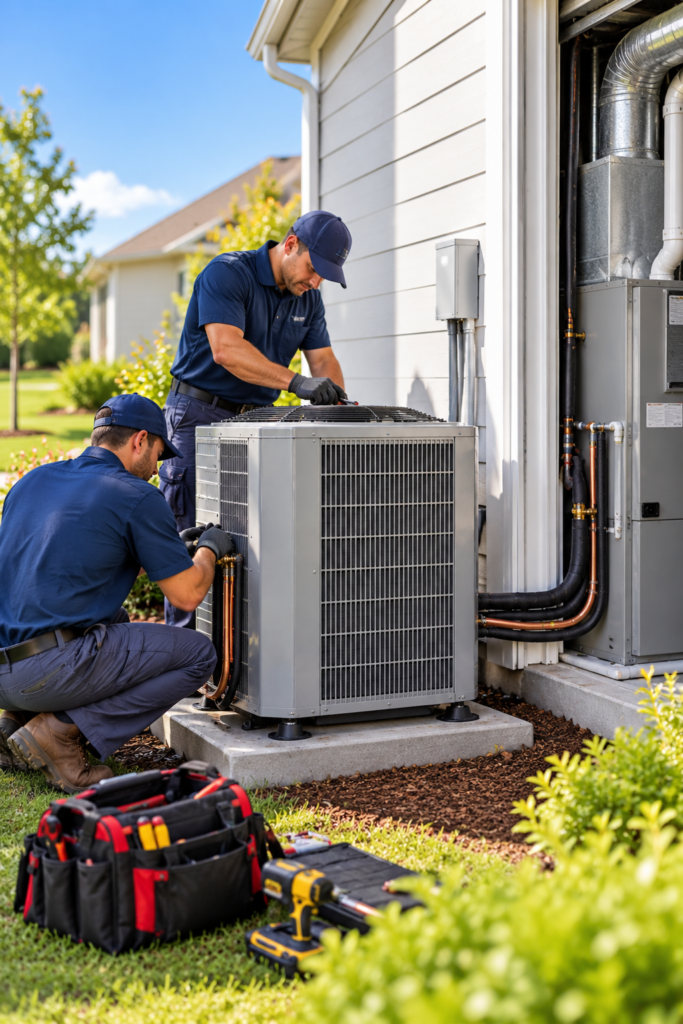
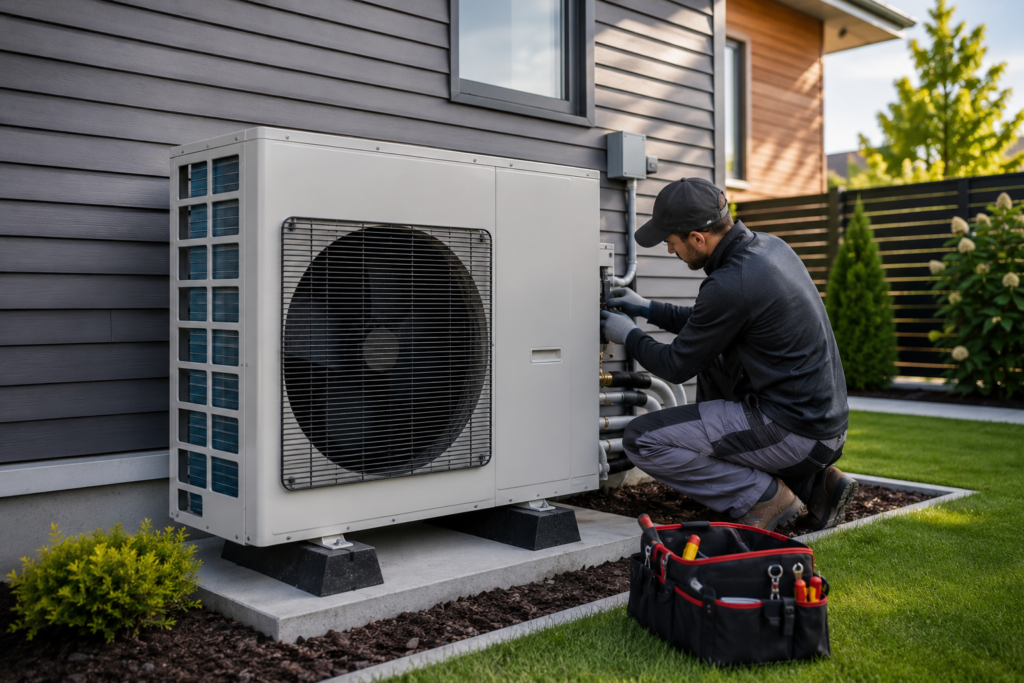
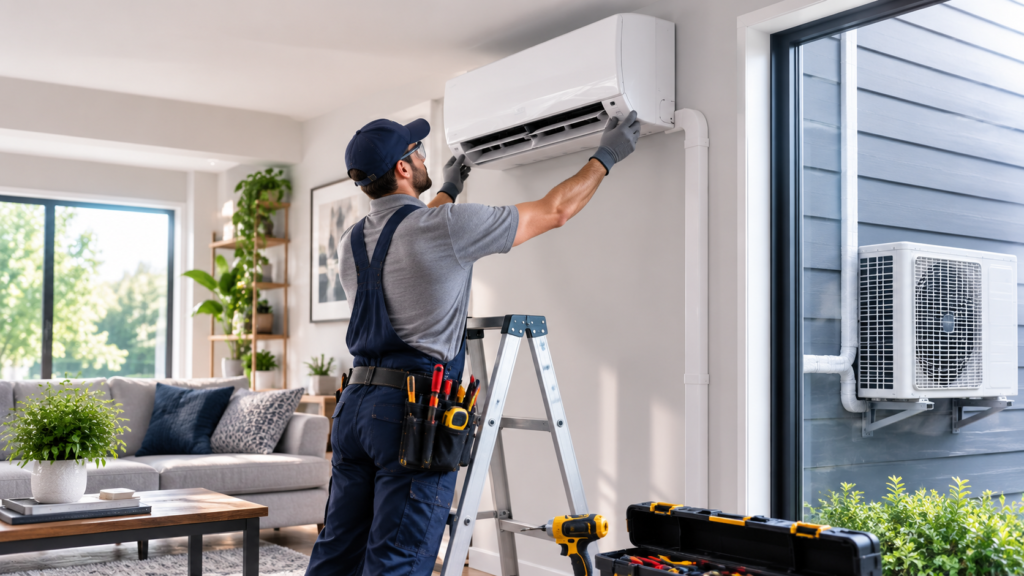
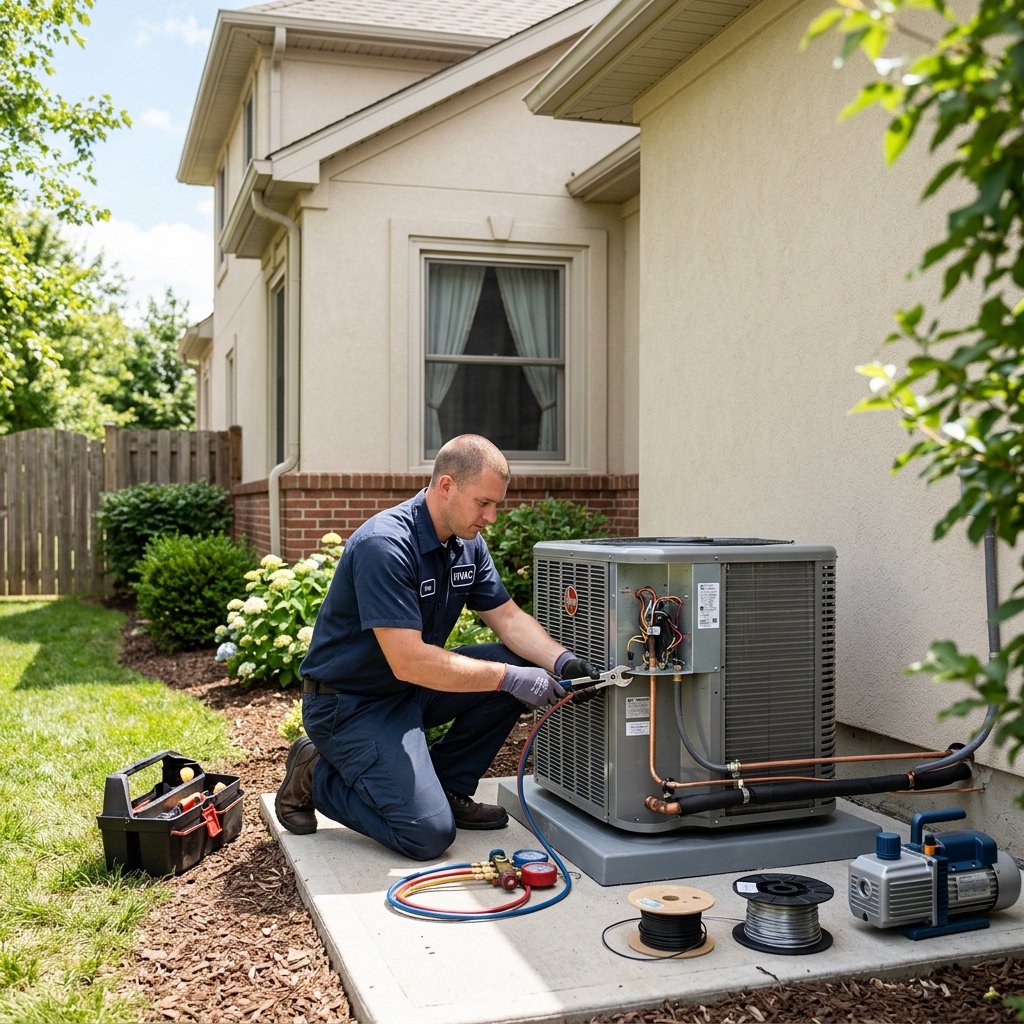
On installation day, the crew removes the old furnace, indoor coil, and outdoor condenser. Technicians install the replacement equipment, complete duct transitions, connect refrigerant tubing, connect electrical components and controls, complete drainage connections, and start the system.
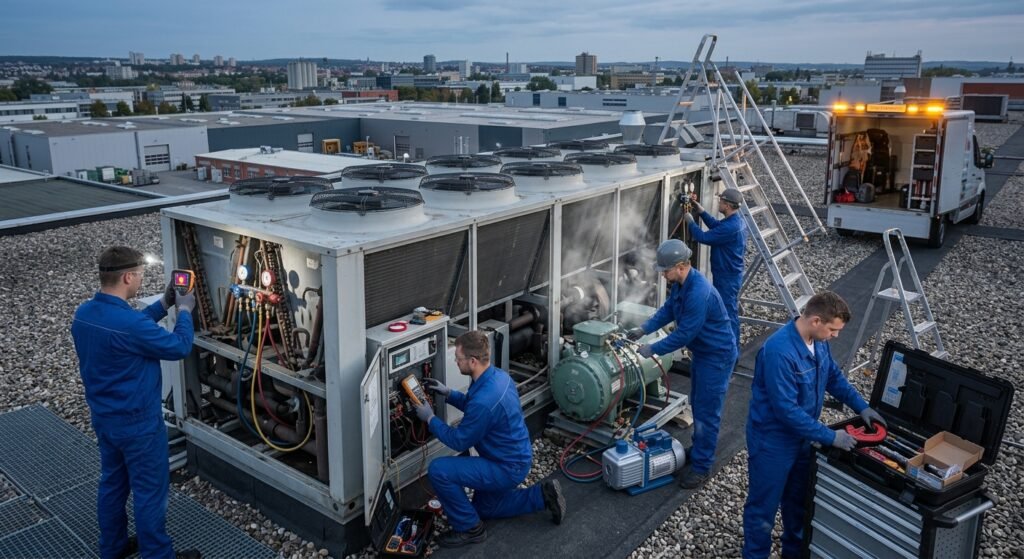
The existing ducts and equipment locations require only minor modifications, so the physical installation can fit within approximately one full working day. If the same home required substantial duct replacement or major electrical changes, the project could extend to 2 to 3 days or longer.
How to Know Whether Your Installation Will Take One Day or Several Days
The installation estimate should identify more than equipment type and price. Homeowners should also ask what work the contractor expects to complete.
A straightforward equipment changeout with compatible ducts, electrical infrastructure, refrigerant routing, drainage, and equipment locations has the best chance of finishing within one day. A project that changes several parts of the home’s HVAC infrastructure needs more time.
Ask the contractor about expected installation duration, duct modifications, electrical work, permit requirements, equipment removal, thermostat changes, testing, and any work that could continue into another day.
What Happens After HVAC Installation?
The contractor verifies system operation after completing the physical installation. Testing can include thermostat response, airflow, heating or cooling operation, electrical components, condensate drainage, controls, and other equipment specific checks.
The homeowner should also receive basic operating information for the new system and thermostat. Any required local inspection can occur according to the jurisdiction’s process. Our HVAC installation cost guide and AC installation cost guide cover pricing for these projects in more detail.