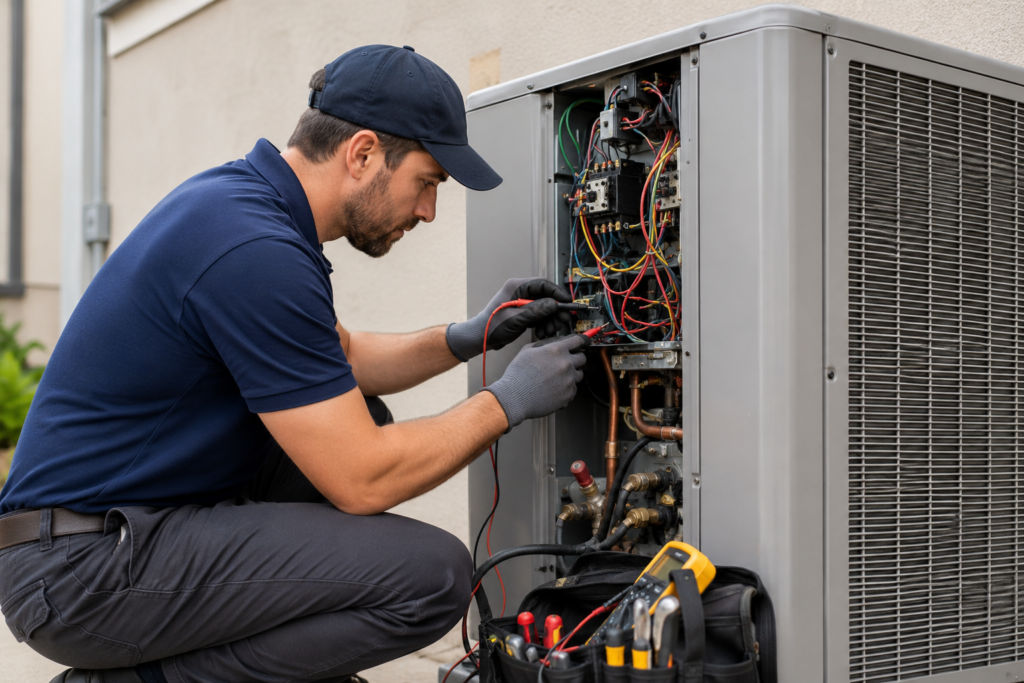
AC Replacement

AC Replacement Near Me

Looking for AC replacement near you? HVAC Reliable Pros evaluates the existing cooling system and determines the requirements for replacement.

An air conditioner that struggles to cool rooms, requires repeated repairs, or experiences a major component failure can leave homeowners deciding between another repair and full replacement. Installing another unit without checking capacity, ductwork, indoor equipment, and electrical requirements can carry existing cooling problems into the new system.

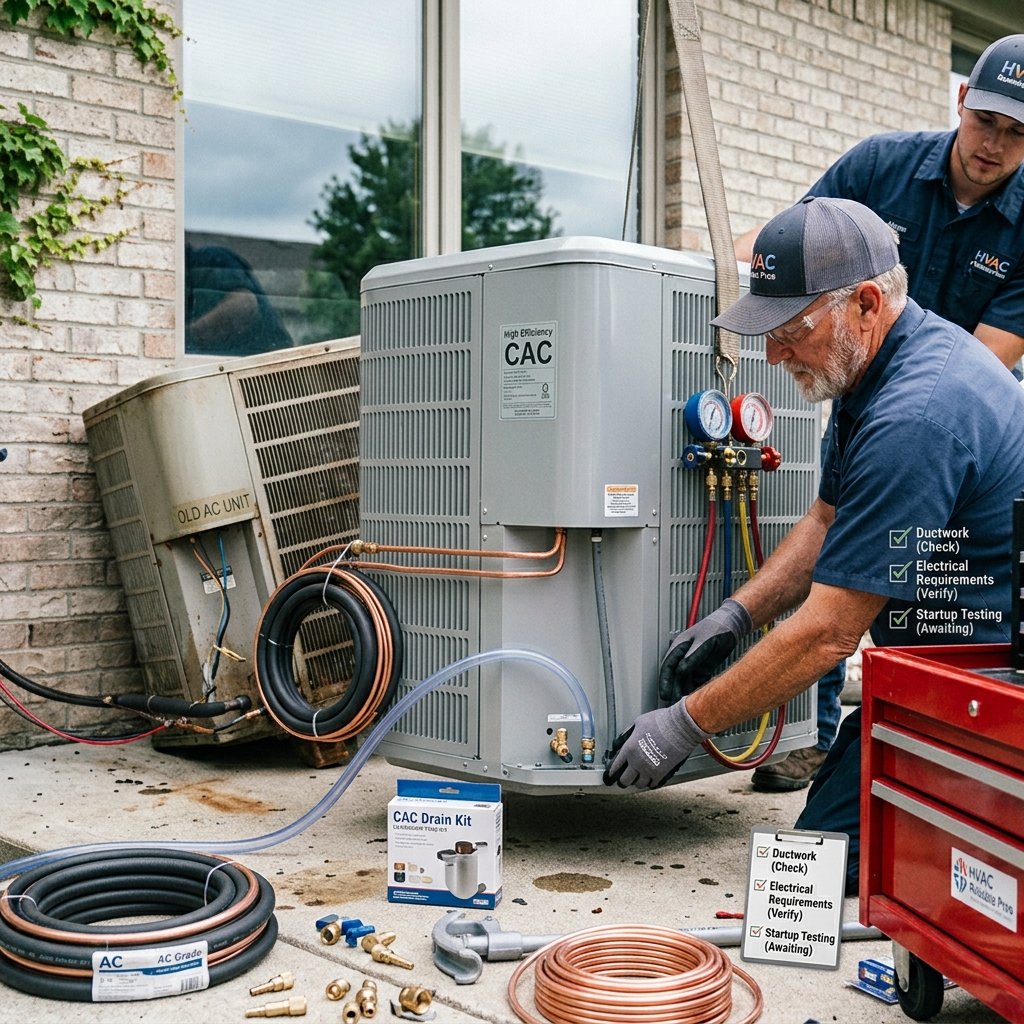
If you are searching for AC replacement near me, HVAC Reliable Pros can evaluate the existing cooling system and determine the requirements for replacement. The replacement process covers cooling load, equipment capacity, indoor and outdoor components, ductwork, refrigerant connections, electrical requirements, drainage, controls, and startup testing.

What Does AC Replacement Include?

AC replacement involves more than removing an outdoor condenser and installing another unit. A complete central air system can include an outdoor condenser, indoor evaporator coil, air handler or compatible furnace components, refrigerant tubing, condensate drainage, thermostat and controls, electrical connections, and supply and return ductwork.

The contractor evaluates the existing components before determining which parts can remain. Compatible and serviceable components can sometimes stay in place, while incompatible, damaged, or unsuitable components can require replacement or modification. The final scope depends on the existing HVAC configuration and the selected replacement equipment.
When Should You Consider AC Replacement?

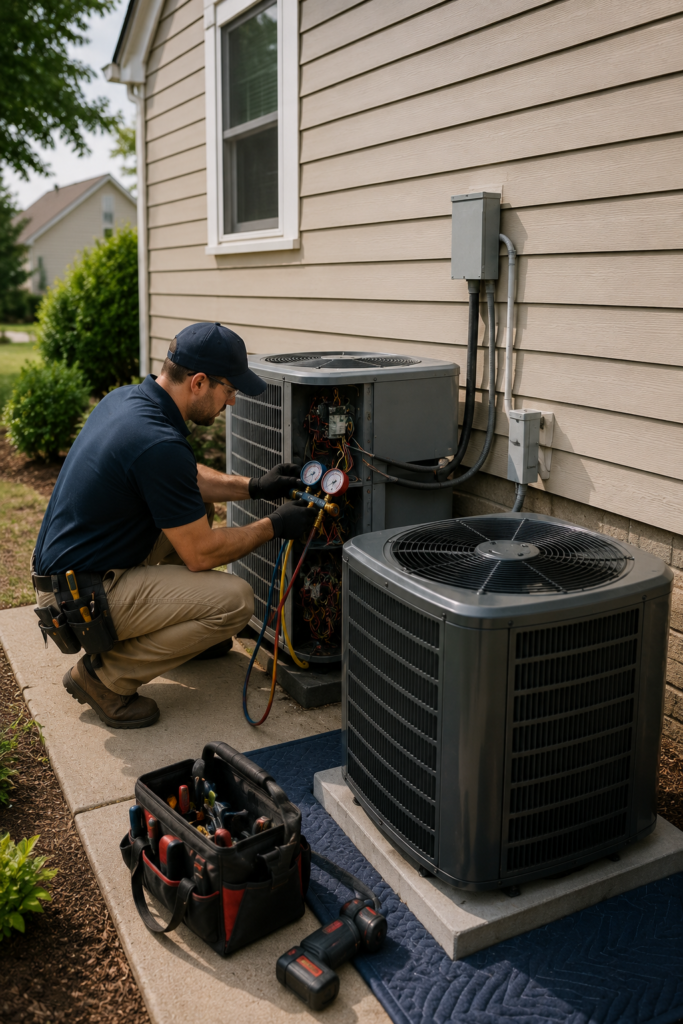
Replacement can make sense when the existing cooling system develops problems that repair cannot address economically or reliably. Common reasons include repeated breakdowns, compressor failure, refrigerant leaks, corroded or damaged coils, inadequate cooling, uneven room temperatures, equipment capacity problems, incompatible indoor and outdoor components, and increasing repair frequency.

One repair does not automatically justify replacing an air conditioner. A technician identifies the failed component, evaluates overall equipment condition, and compares the required repair with the condition of the complete system.

AC Repair Versus Replacement

Repair makes sense when the contractor can correct a specific fault and the remaining equipment remains serviceable. For example, a failed capacitor, control problem, or another replaceable component can justify repair when the rest of the cooling system operates correctly.

Replacement becomes more practical when several problems occur together. An older system with repeated refrigerant leaks, deteriorated coils, compressor problems, and recurring service calls creates a different decision from a system with one isolated electrical fault. The contractor diagnoses the existing system before recommending replacement.

How Local AC Contractors Size Replacement Equipment

Replacing an existing air conditioner does not mean the new system should automatically use the same capacity. The previous equipment may have been incorrectly sized, and home improvements can also change cooling requirements. New windows, insulation, additions, air sealing, or layout changes can affect the home’s cooling load. The contractor calculates cooling requirements before selecting replacement capacity.

One ton of nominal cooling capacity equals approximately 12,000 BTUs per hour. A nominal 2 ton system represents approximately 24,000 BTUs per hour, a nominal 3 ton system represents approximately 36,000 BTUs per hour, and a nominal 4 ton system represents approximately 48,000 BTUs per hour. The load calculation, not the old equipment label alone, guides replacement capacity.

Why Correct Replacement AC Size Matters

A larger replacement unit does not automatically provide better cooling. An oversized air conditioner can satisfy thermostat demand quickly and create short operating cycles, while an undersized air conditioner can struggle to meet the calculated cooling demand during demanding outdoor conditions.

Home size alone also cannot determine capacity. Two homes with 2,000 square feet of floor area can require different cooling capacities because insulation, windows, air leakage, orientation, ceiling height, occupancy, and local climate affect cooling demand. Correct sizing connects equipment capacity to the property.

Should the Indoor Coil Be Replaced With the AC?

A split central air conditioner uses outdoor and indoor equipment together. The outdoor condenser rejects heat outdoors, and the indoor evaporator coil absorbs heat from indoor air. Replacement equipment should form a compatible combination.

Keeping an existing indoor coil without checking compatibility can affect capacity, efficiency, refrigerant requirements, and equipment operation. The contractor verifies the complete indoor and outdoor combination before deciding which components can remain, since equipment matching matters more than selecting a condenser based only on tonnage.

Existing Refrigerant Lines During AC Replacement

Refrigerant tubing connects the outdoor condenser with the indoor evaporator coil. Existing refrigerant lines can sometimes remain when line dimensions, physical condition, routing, equipment requirements, and manufacturer specifications support continued use. Other projects require new tubing, since corrosion, damage, unsuitable dimensions, or equipment requirements can make replacement necessary.

The contractor inspects the existing line set before including reuse in the project plan. The replacement estimate states whether the project keeps or replaces existing refrigerant tubing.

Ductwork Evaluation Before AC Replacement

A new air conditioner still depends on suitable airflow. Restricted supply ducts can reduce conditioned airflow to rooms, and damaged connections can lose cooled air before conditioned air reaches living areas. Insufficient return airflow can also affect system performance.

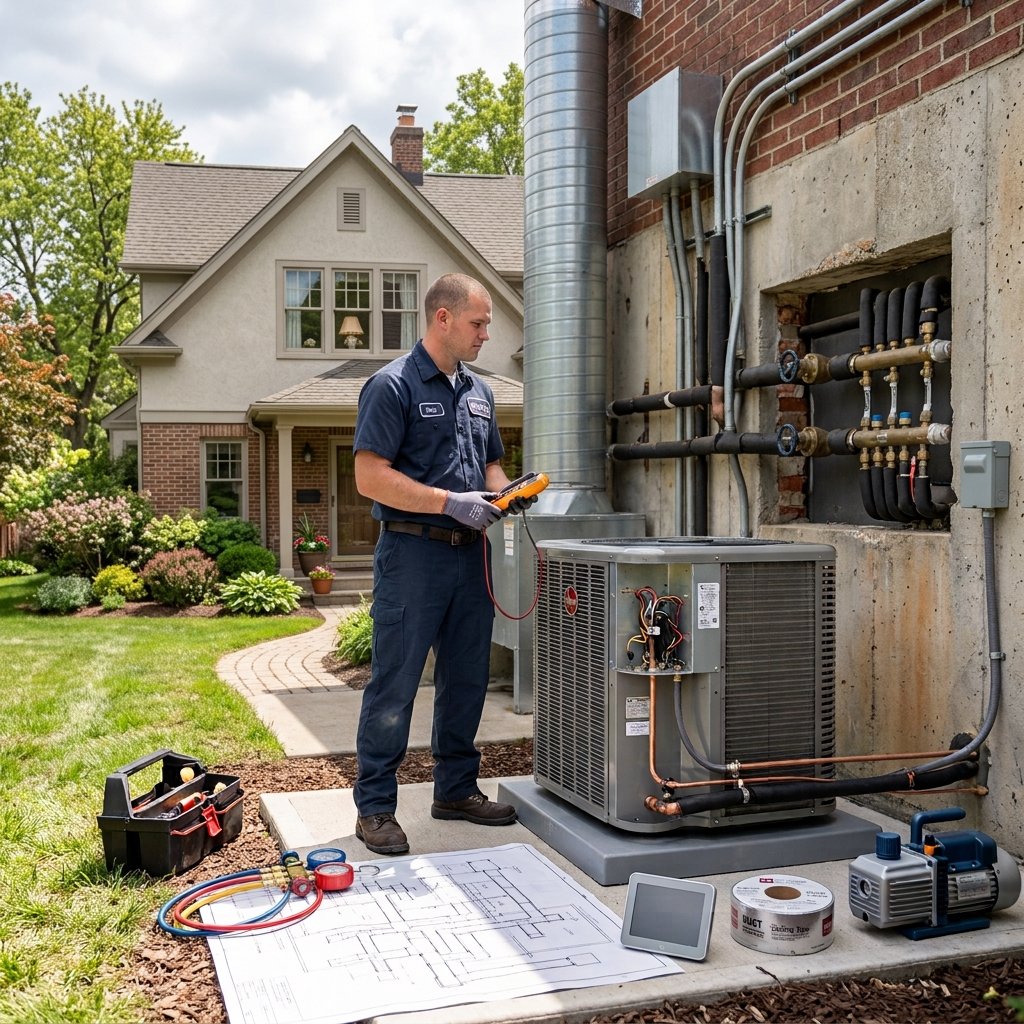
The contractor inspects accessible ductwork before connecting replacement equipment. A complete duct replacement does not automatically become necessary: serviceable ducts can remain, while specific damaged or unsuitable sections can require correction when inspection identifies a problem. Replacing the AC without addressing documented airflow problems can leave the homeowner with the same comfort complaint.

Electrical Requirements for Replacement AC

Replacement equipment needs electrical service that matches equipment specifications. The contractor evaluates existing circuits, breakers, disconnects, wiring, and relevant electrical components. Existing infrastructure can remain when the electrical configuration supports the selected replacement equipment, while other installations require modifications.

A replacement system with different electrical requirements can change the project scope even when the new condenser occupies the same outdoor location. The contractor identifies required electrical work before installation begins.

Thermostat and Control Compatibility

Existing thermostat controls can remain when the new equipment supports the existing control configuration. Some replacement systems require different controls: multi stage equipment, variable operation, heat pump configurations, zoning, and communicating systems can use different thermostat requirements.

The contractor confirms compatibility during equipment selection. Replacing a thermostat without considering equipment controls can limit available system functions, so the project estimate identifies required thermostat or control changes.

AC Efficiency During Replacement

Replacement gives homeowners an opportunity to compare current equipment efficiency. SEER2 measures seasonal cooling efficiency under standardized test conditions, and higher SEER2 ratings represent greater seasonal cooling efficiency under the test procedure.

Efficiency should not become the only selection factor. Cooling capacity, local climate, equipment configuration, installation cost, controls, ductwork, and expected cooling use also matter, so the contractor compares complete matched equipment combinations rather than comparing outdoor condensers alone.

Can the Existing Furnace Stay During AC Replacement?

Yes, an existing furnace can sometimes remain during central AC replacement. Many homes combine a furnace with a split central air conditioner, and the furnace blower moves conditioned air through the duct system while the evaporator coil provides cooling.

The contractor verifies physical, airflow, control, and equipment compatibility before keeping the existing furnace. An older furnace or incompatible blower configuration can change the replacement plan.

Should You Replace the Furnace and AC Together?

Replacing both systems can make sense when the furnace and air conditioner both approach replacement condition, but every home requires an individual assessment. A serviceable furnace does not automatically need replacement because the air conditioner fails.

The contractor evaluates furnace condition, blower compatibility, controls, equipment age, and homeowner plans. Replacing both systems at the same time can reduce duplicated installation work in some projects, while keeping a suitable furnace can avoid unnecessary replacement expense in others.

How It Works

Central Air Replacement Process

A professional AC replacement follows several core stages from inspection through startup testing.

  1. Existing System Inspection

    The contractor evaluates the existing condenser, indoor equipment, controls, refrigerant lines, electrical components, ductwork, and cooling problems.

  2. Cooling Load Evaluation

    The contractor determines the cooling capacity required by the home.

  3. Replacement Equipment Selection

    The contractor selects compatible indoor and outdoor equipment based on capacity and project requirements.

  4. Existing Equipment Removal

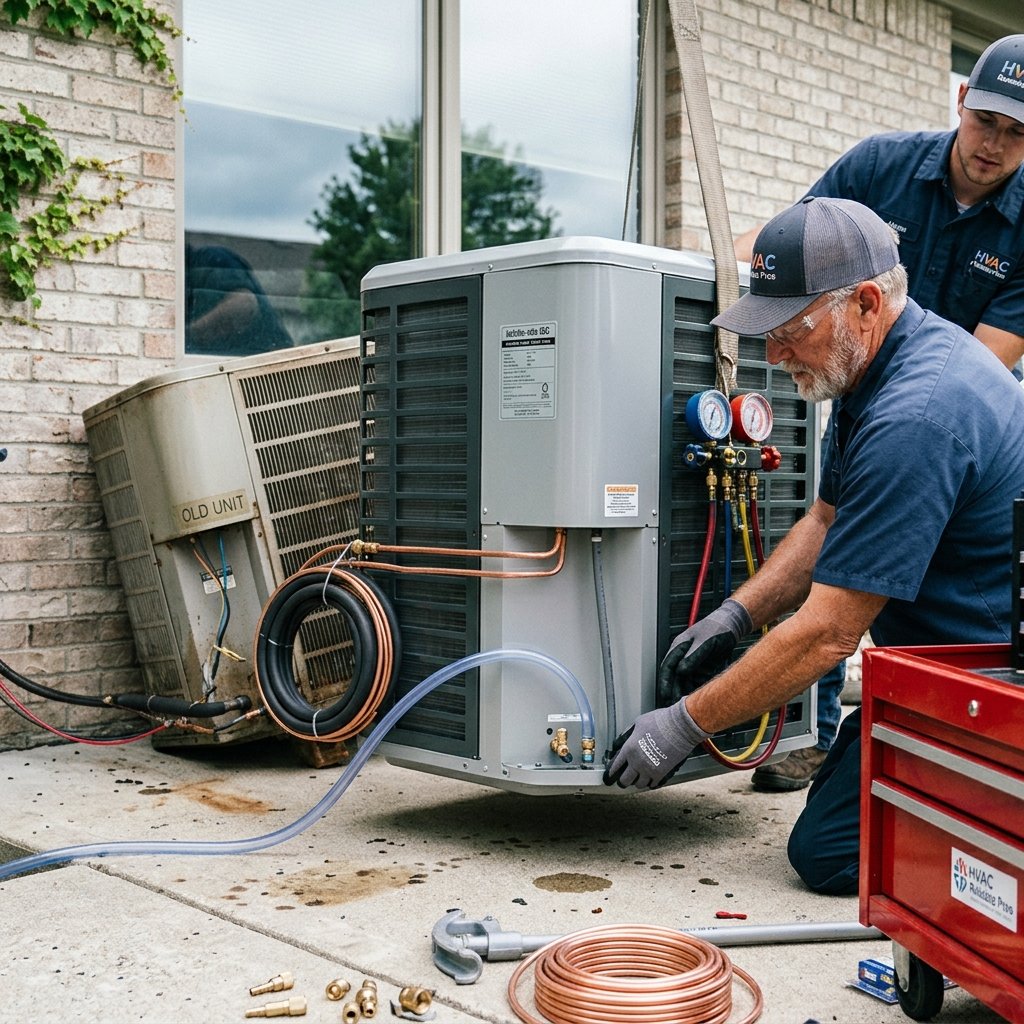
    The installation crew removes equipment included within the replacement scope and prepares the installation locations.

  5. New Equipment Installation

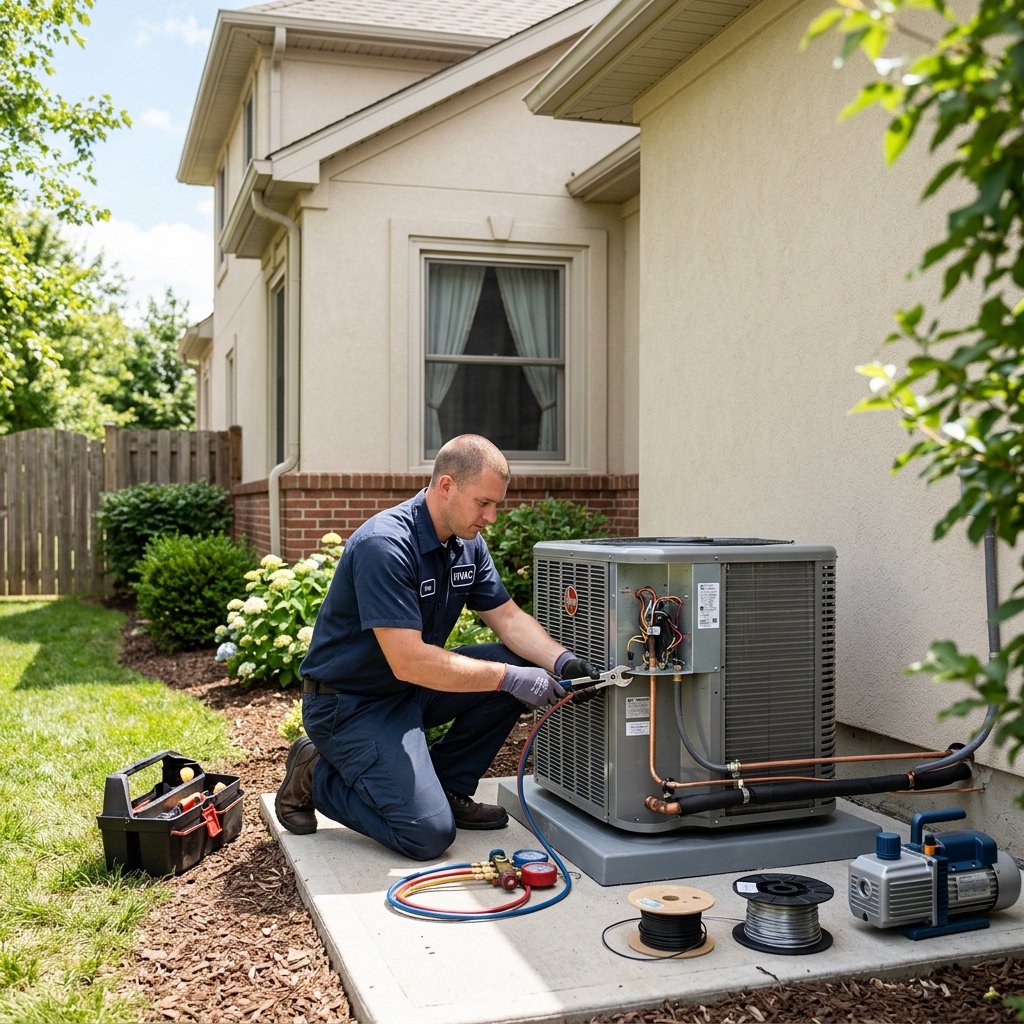
    The crew installs the selected condenser, indoor components, required refrigerant connections, controls, drainage, and electrical connections.

  6. System Startup and Testing

    The technician starts the replacement system and checks cooling operation, airflow, controls, drainage, and applicable operating conditions.

Real World AC Replacement Example

Consider a 2,300 square foot home in Florida with an older split central air conditioner. The homeowner reports weak cooling in two bedrooms and repeated AC service calls, and inspection identifies deteriorated outdoor equipment and restricted return airflow near the bedroom area.

A cooling load calculation identifies a requirement close to 36,000 BTUs per hour, equal to a nominal 3 ton cooling capacity. The existing duct system remains serviceable overall, but the return configuration needs correction.

The replacement project removes the existing cooling equipment, corrects the identified return airflow problem, installs a matched indoor and outdoor cooling combination, connects compatible controls and drainage, and completes startup testing. The contractor addresses both equipment condition and documented airflow problems rather than replacing the condenser alone.

How Much Does AC Replacement Cost?

A typical residential AC replacement can cost around $6,000, while many projects fall roughly between $3,800 and $7,900 depending on equipment and installation requirements. Some projects can exceed $10,000 when higher cost equipment, duct modifications, electrical changes, difficult access, or additional HVAC work expands the scope.

Cost factors can include equipment capacity, SEER2 rating, indoor and outdoor components, refrigerant line requirements, duct modifications, electrical work, thermostat controls, equipment access, existing equipment removal, permit requirements, and local labor rates.

What to Look for in an AC Replacement Company Near You

A replacement contractor diagnoses the existing cooling system before recommending new equipment. The evaluation covers the cooling problem, required equipment capacity, indoor and outdoor component compatibility, ductwork, refrigerant lines, controls, electrical requirements, and drainage.

Homeowners should ask why the contractor selected a particular capacity and equipment configuration. A written estimate should also identify the components and installation work included in the price. Property owners confirm applicable contractor credentials, local permit requirements, equipment specifications, and warranty terms before approving replacement.

Areas We Serve

HVAC Reliable Pros provides AC replacement services across available service areas in California, Florida, Ohio, and Washington. Homeowners can request help with central AC replacement, equipment sizing, ductwork evaluation, airflow concerns, thermostat compatibility, and complete system replacement.

Service availability can vary by city, county, and ZIP code within each state. Local climate and property conditions also influence cooling requirements, so HVAC Reliable Pros evaluates each project according to the home’s cooling load and existing HVAC setup. Call (866) 280 1324 to confirm AC replacement availability in your area and request a free estimate.

Homeowners who need a new system rather than a replacement can review our AC installation near me guide, and our central air replacement service covers the equipment side of a full replacement project.

Our Services

Explore HVAC Reliable Pros Cooling Services

Compare our available cooling and heating installation and replacement services.

FAQ

Frequently Asked Questions About AC Replacement Near Me

How much does AC replacement cost?

A typical residential project can cost around $6,000, while many central AC projects fall around $3,800 to $7,900. Equipment capacity, efficiency, ductwork, electrical work, controls, and property conditions affect the final amount.

Should I repair or replace my AC?

Repair can make sense for an isolated fault when the remaining equipment stays serviceable. Replacement becomes more practical when equipment condition, repeated failures, repair requirements, and overall system performance create a larger problem.

Can I replace only the outside AC unit?

Sometimes, but the new condenser must work with compatible indoor equipment. The contractor verifies the evaporator coil, refrigerant requirements, capacity, controls, and complete equipment combination before replacing only the outdoor unit.

Does a replacement AC need the same tonnage?

Not necessarily. The contractor calculates the home's cooling load instead of automatically copying the old equipment capacity. Building improvements or incorrect previous sizing can change the required capacity.

Can existing ductwork stay during AC replacement?

Yes. Existing ducts can remain when the duct system supports required airflow and remains serviceable. The contractor corrects documented leaks, restrictions, or return airflow problems where necessary.

How long does AC replacement take?

Many straightforward residential replacements can finish within one working day, while ductwork, electrical modifications, difficult access, or additional equipment can extend the project. The contractor confirms the project schedule after inspecting the property.

Get AC Replacement Near You

AC replacement should solve the existing cooling problem rather than simply exchange one condenser for another. HVAC Reliable Pros evaluates existing cooling equipment and property requirements before defining the replacement scope.

  • Existing system diagnosed before a replacement is recommended
  • Matched indoor and outdoor equipment
  • Complete startup and airflow testing
Get a Free Estimate

Leave a Reply

Your email address will not be published. Required fields are marked *