Installation Timeline

How Long Does AC Installation Take?

Most central AC replacements take 4 to 8 hours. Learn how long AC installation takes, what happens on installation day, and what can extend the timeline.

A standard central AC replacement usually takes about 4 to 8 hours, which means many homeowners can have a replacement system installed within one working day. A first time central air installation or a project that requires new ductwork, electrical upgrades, equipment relocation, or extensive modifications can take 1 to 3 days or longer.

The exact timeline depends on more than the air conditioner. The contractor needs to remove existing equipment, install compatible indoor and outdoor components, complete refrigerant and electrical connections, connect drainage and controls, and test the complete cooling system.

Replacing an existing central AC system usually takes less time because the home already has cooling infrastructure. Installing central air in a home without suitable ductwork or electrical infrastructure creates a larger project.

How Long Does a New AC Installation Take?

Most straightforward central AC replacements finish within 4 to 8 hours. Projects that require additional building or HVAC work need more time.

AC Installation Timeline Overview

AC Installation Type Typical Installation Time
Straightforward central AC replacement 4 to 8 hours
AC replacement with minor modifications About 1 working day
AC and furnace replacement About 1 to 2 days
New central AC with existing suitable ducts About 1 day or longer
Central AC with substantial duct modifications 1 to 3 days or longer
First time central air without suitable ducts 2 to 5 days or longer
Single zone ductless installation Often within 1 day
Multi zone ductless installation About 1 to 2 days or longer

These ranges provide planning estimates. Equipment access, home layout, system configuration, electrical work, duct condition, and local requirements can change the actual installation time.

AC Replacement Versus First Time AC Installation

A central AC replacement usually provides the fastest installation because much of the required infrastructure already exists.

The home may already have an outdoor equipment location, indoor evaporator coil location, ductwork, refrigerant route, electrical circuit, thermostat wiring, condensate drainage, and equipment supports. The contractor can inspect these components and determine which parts can support the replacement system.

A first time central air installation requires more planning and field work. The contractor may need to create refrigerant routes, install electrical infrastructure, add drainage, modify the indoor HVAC system, or construct an air distribution system. For this reason, a first time installation can take several days when the home lacks suitable central cooling infrastructure. Our HVAC installation service covers this scenario in more detail.

What Happens Before AC Installation Day?

The contractor should complete several planning steps before technicians arrive with the new equipment.

Cooling load assessment: the contractor needs to determine how much cooling capacity the home requires. Conditioned square footage provides one input, but windows, insulation, ceiling height, air leakage, orientation, climate, occupancy, and other building characteristics also affect cooling demand. The contractor uses the building load rather than automatically installing the same tonnage as the old air conditioner. Our HVAC sizing guide and tonnage calculator cover this step in more detail.

Existing system inspection: the contractor inspects the existing condenser, indoor coil, air handler or furnace, accessible ductwork, refrigerant route, electrical infrastructure, drainage, thermostat, and equipment locations. This inspection helps identify work that could extend installation time. Discovering required modifications before installation day allows the contractor to include those tasks in the planned scope.

Equipment selection: central AC systems use compatible indoor and outdoor equipment. The contractor selects the outdoor condenser and indoor coil or air handling components according to capacity, system configuration, efficiency, and compatibility requirements. Equipment selection can also affect installation requirements when the replacement differs physically or mechanically from the previous system.

Permit planning: local jurisdictions can require permits for AC replacement or installation. Requirements vary by city, county, project scope, and electrical or mechanical work. Permit processing and inspection scheduling can affect the complete project timeline even when technicians finish the physical installation within one day.

Installation Day

What Happens During AC Installation?

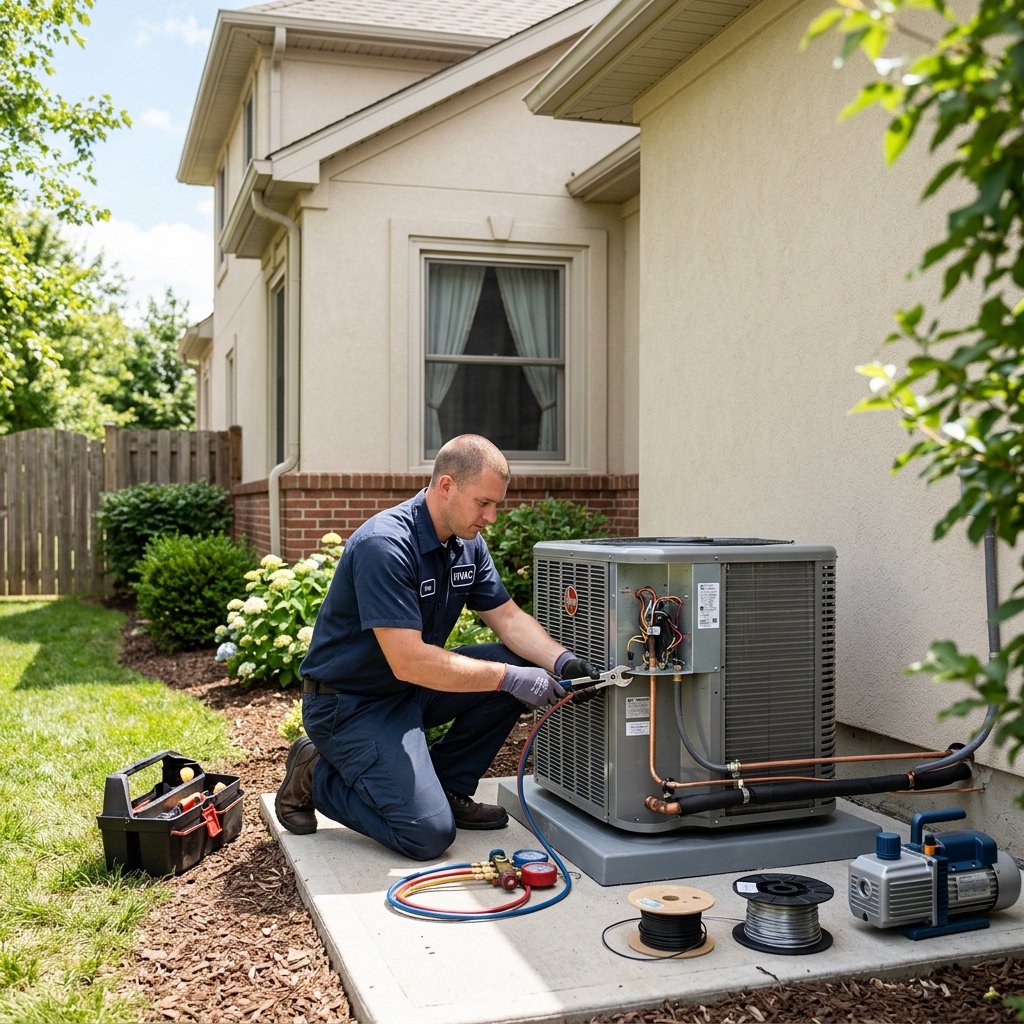
A professional central AC installation follows several stages, which explains why even a straightforward replacement can require most of a working day.

  1. Prepare the Home and Work Areas

    The installation crew confirms the project scope, prepares access to the indoor and outdoor equipment, and protects nearby floors and surfaces before moving equipment through the home.

  2. Shut Down and Remove the Existing AC System

    The crew disconnects the existing system, handles the refrigerant circuit using appropriate procedures, disconnects electrical connections, and removes the old condenser and applicable indoor components.

  3. Prepare the Indoor and Outdoor Locations

    Technicians adjust the outdoor equipment base, indoor transitions, refrigerant connections, drainage, electrical connections, or equipment supports when the replacement differs from the previous equipment.

  4. Install the New Indoor and Outdoor Equipment

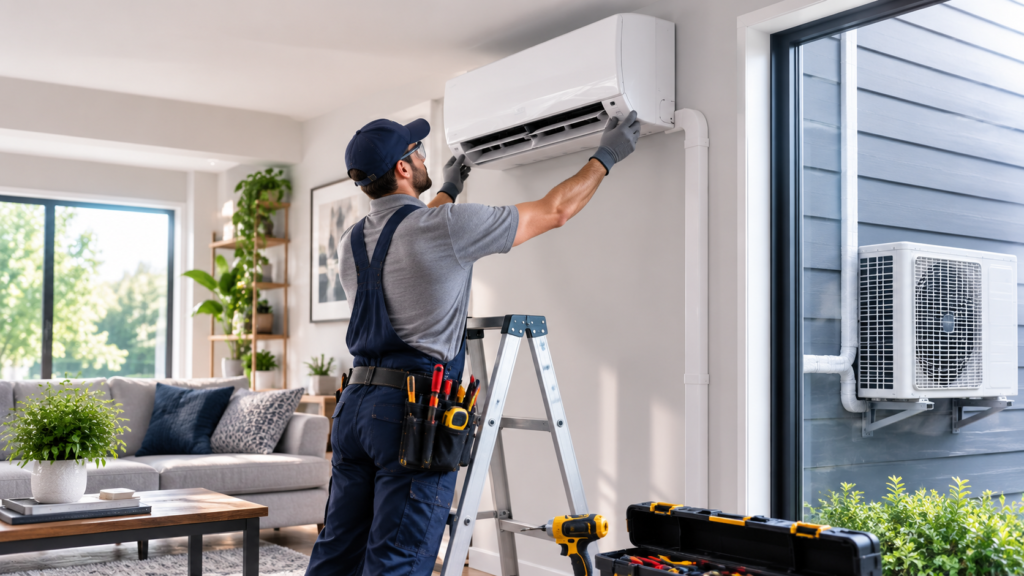
    Technicians position and secure the outdoor condenser and indoor evaporator coil, connecting the coil correctly with the air handler or furnace and the home's duct system.

  5. Connect the Refrigerant Circuit

    The contractor evaluates whether the existing line set can support the replacement equipment and installs or reroutes refrigerant tubing as required by condition, dimensions, and manufacturer specifications.

  6. Complete Electrical Connections

    Technicians connect the condenser, indoor components, disconnect, thermostat, and controls, completing any wiring, circuit, breaker, or disconnect changes the new equipment requires.

  7. Connect Condensate Drainage

    Technicians connect the drainage system and verify proper flow, reusing existing drainage when condition and configuration support continued use.

  8. Connect the AC System to the Ductwork

    The indoor equipment receives suitable supply and return connections, with technicians modifying transitions or connections when the replacement equipment differs from the old configuration.

  9. Start, Test, and Verify the New AC

    The contractor checks system operation, controls, drainage, airflow, electrical components, and cooling response, including refrigerant system commissioning, before completing the project.

What Can Make AC Installation Take Longer?

Several property conditions can turn a straightforward 4 to 8 hour replacement into a longer project.

New or modified ductwork: ductwork creates one of the largest potential changes to the timeline. Damaged ducts, restricted returns, poor connections, or an incompatible layout can require repairs or modifications. A complete duct replacement can add 1 to 3 days or more, depending on home size and accessibility. The contractor should inspect accessible ducts before installation whenever possible.

Electrical upgrades: a new AC system can require different electrical infrastructure from the existing equipment. Circuit changes, disconnect replacement, wiring modifications, or electrical panel work add labor and can require coordination with electrical work. Identifying these requirements during the initial assessment helps prevent unexpected installation delays.

New refrigerant lines: existing refrigerant tubing cannot always support the replacement system. Installing a new line set can add time, particularly when technicians need to route tubing through finished walls, multiple floors, attics, crawl spaces, or other difficult areas. Equipment relocation can make the refrigerant route even longer.

Difficult equipment access: equipment location directly affects installation time. An outdoor condenser with open ground level access allows technicians to work more easily. Indoor equipment located in a small attic, crawl space, narrow closet, or other restricted area can take longer to remove and replace. Doorways, staircases, attic openings, fences, landscaping, and side yard clearance can also affect equipment movement.

Equipment relocation: moving the condenser or indoor equipment creates more work than using the existing locations. Relocation can require new refrigerant tubing, electrical connections, drainage, equipment supports, duct transitions, or structural modifications. The contractor should identify relocation requirements before finalizing the project schedule.

Unexpected existing system problems: some conditions only become fully visible after technicians remove the old equipment. The crew can discover damaged connections, drainage problems, deteriorated supports, duct damage, electrical limitations, or other issues hidden behind the existing system. The contractor should explain any newly discovered work before expanding the project scope.

How Long Does Central AC Replacement Take?

A straightforward central AC replacement usually takes 4 to 8 hours. This timeline generally assumes that the home already has suitable ductwork, electrical infrastructure, equipment locations, and other required components.

Replacing both the outdoor condenser and indoor cooling components can require most of the working day because technicians need to remove the old equipment, install the replacement system, complete connections, and perform startup testing. Projects involving significant modifications can extend into a second day. Our central AC replacement service covers this process in more detail.

How Long Does It Take to Install Central Air in a House Without AC?

Adding central air to a home without an existing cooling system can take 2 to 5 days or longer when the project requires new infrastructure.

The contractor may need to install ductwork, create supply and return pathways, add electrical circuits, establish equipment locations, run refrigerant tubing, install drainage, and connect controls. A home that already has suitable furnace ductwork can require less work than a property without any central air distribution system. The contractor should inspect the home before estimating the timeline. Our residential AC installation service covers this scenario.

How Long Does AC Installation Take With Existing Ductwork?

A replacement can often finish within 4 to 8 hours when the existing duct system supports the new AC equipment. Existing ducts still need evaluation. Damaged sections, restricted return pathways, poor equipment connections, or airflow problems can require additional work. The contractor should avoid assuming that existing ductwork automatically provides suitable air distribution.

How Long Does AC Installation Take With New Ductwork?

Adding substantial new ductwork can extend an AC installation to 2 to 5 days or longer, depending on the building. Home size, number of floors, attic or crawl space access, supply register locations, return pathways, framing, and duct routing all influence the schedule. A complete central air retrofit therefore requires more planning than a standard equipment replacement.

How Long Will the Home Be Without Air Conditioning?

A home usually remains without cooling during most of the physical replacement process. For a standard same day installation, homeowners can expect several hours without air conditioning. The contractor needs to disconnect the existing system before installing and testing the replacement equipment.

Indoor temperatures can rise quickly during hot weather, particularly in Florida and warmer parts of California. Homeowners with young children, older adults, pets, or temperature sensitive household needs should plan for the cooling interruption before installation day.

Can Weather Delay AC Installation?

Severe weather can interrupt outdoor installation work. Heavy rain, thunderstorms, high winds, extreme conditions, or unsafe rooftop conditions can affect tasks involving outdoor equipment and electrical connections. Weather does not delay every installation, but homeowners should allow some scheduling flexibility when forecasts create unsafe working conditions.

How to Prepare for AC Installation Day

Simple preparation can help technicians access the equipment without avoidable delays. Clear items away from the indoor HVAC equipment, outdoor condenser, thermostat, and electrical panel. Create an open route for technicians to move equipment between the work areas and the installation vehicle.

Move vehicles away from access points when necessary and secure pets outside the work zones. Homeowners should also discuss thermostat placement and other installation decisions before the crew begins work.

Do You Need to Be Home During AC Installation?

Homeowners should generally arrange for an adult to provide access at the start of the installation and remain available for questions. The contractor may need decisions about equipment placement, thermostat configuration, access, or unexpected property conditions.

The homeowner should also receive an explanation of the thermostat and basic system operation after installation. Individual contractors can have different access requirements, so confirm expectations before installation day.

AC Installation Timeline Example

Consider a 1,850 square foot home in Florida replacing an aging central AC system. The contractor evaluates the cooling load, inspects the existing indoor and outdoor equipment, checks accessible ductwork, reviews return airflow, examines the refrigerant route, and confirms electrical requirements before installation.

On installation day, the crew removes the existing condenser and indoor cooling components. Technicians prepare the equipment locations, install compatible replacement equipment, complete refrigerant and electrical connections, connect drainage and controls, and verify the duct connections.

The existing ductwork and equipment locations remain suitable, so the project requires no extensive construction. A replacement with this scope can fit within approximately 4 to 8 hours. If the contractor discovers a need for substantial duct modifications or electrical upgrades, the project can extend into another day.

AC Installation Time Versus Complete Project Time

The 4 to 8 hour figure describes physical installation for many straightforward replacements, not necessarily the complete process from the first estimate to final completion.

The broader project can include the initial assessment, load calculation, equipment selection, proposal approval, equipment ordering, permit processing, scheduling, physical installation, and required inspection. Separating these timelines helps homeowners plan correctly. A one day installation does not mean every part of the replacement process happens within one day.

What Should Happen Before the Installer Leaves?

The contractor should verify system operation before completing the installation. The final checks can include thermostat response, cooling operation, airflow, electrical operation, condensate drainage, controls, and refrigerant system performance.

The contractor should also explain basic thermostat operation and any homeowner responsibilities related to the new equipment. Do not judge installation quality only by speed. Correct connections, startup procedures, and system verification matter more than finishing the project as quickly as possible. Our AC installation cost guide and AC unit replacement cost guide cover what these projects typically cost.

Areas We Serve

HVAC Reliable Pros provides AC installation and replacement across available service areas in California, Florida, Ohio, and Washington. HVAC Reliable Pros can evaluate central AC replacement, first time AC installation, equipment sizing, existing ductwork, refrigerant routing, electrical requirements, and related installation conditions.

Service availability varies by city, county, and ZIP code. Call (866) 280 1324 to confirm AC installation availability and request a free estimate. Homeowners still comparing options can also review our AC replacement near me guide, and homes without existing ducts can consider our ductless mini split service.

Our Services

Explore HVAC Reliable Pros Cooling Services

Compare our available cooling installation and replacement services.

FAQ

Frequently Asked Questions

Can a new AC be installed in one day?

Yes. A straightforward central AC replacement can often finish within 4 to 8 hours when the home has suitable ductwork, electrical infrastructure, equipment locations, and refrigerant routing. Larger modifications can extend the project beyond one day.

How long does it take to replace an outside AC unit?

Physical work on a central AC replacement commonly forms part of a 4 to 8 hour installation. The contractor must also confirm compatibility with the indoor coil and other system components rather than treating the outdoor condenser as an independent appliance.

Does AC installation take longer with new ductwork?

Yes. Substantial duct installation can extend the project to 2 to 5 days or longer, depending on home size, layout, access, and the amount of air distribution work required.

How long does it take to install AC in a house without central air?

A first time central air installation can take approximately 2 to 5 days or longer when the home needs ducts, electrical infrastructure, refrigerant tubing, drainage, and new equipment locations.

Will I have AC immediately after installation?

The new AC can begin cooling after technicians complete installation, startup, and required operational checks. Local inspection procedures can vary, so homeowners should confirm any jurisdiction specific requirements with the contractor.

What causes an AC installation to take more than eight hours?

New ductwork, electrical changes, refrigerant line replacement, equipment relocation, restricted access, drainage modifications, or unexpected property conditions can extend installation beyond eight hours.

Schedule Your AC Installation

Most straightforward central AC replacements take approximately 4 to 8 hours, allowing many projects to finish within one working day. A pre installation assessment helps identify these requirements before installation day and gives homeowners a clearer project timeline.

  • Cooling load and existing equipment assessed first
  • Written timeline before work begins
  • Complete testing before the crew leaves
Get a Free Estimate

Leave a Reply

Your email address will not be published. Required fields are marked *