How Efficiency Affects AC Installation Cost
Higher efficiency equipment can increase the initial purchase price. SEER2 measures seasonal cooling efficiency under standardized testing conditions, and a higher SEER2 rating represents greater seasonal cooling efficiency under the test procedure.
Equipment manufacturers reach higher efficiency levels through compressor technology, indoor equipment combinations, controls, and other design features. Higher efficiency does not automatically create the best financial choice for every home, so homeowners compare equipment price, local climate, expected cooling demand, and complete matched system performance.
Central Air Cost Versus Ductless AC Cost
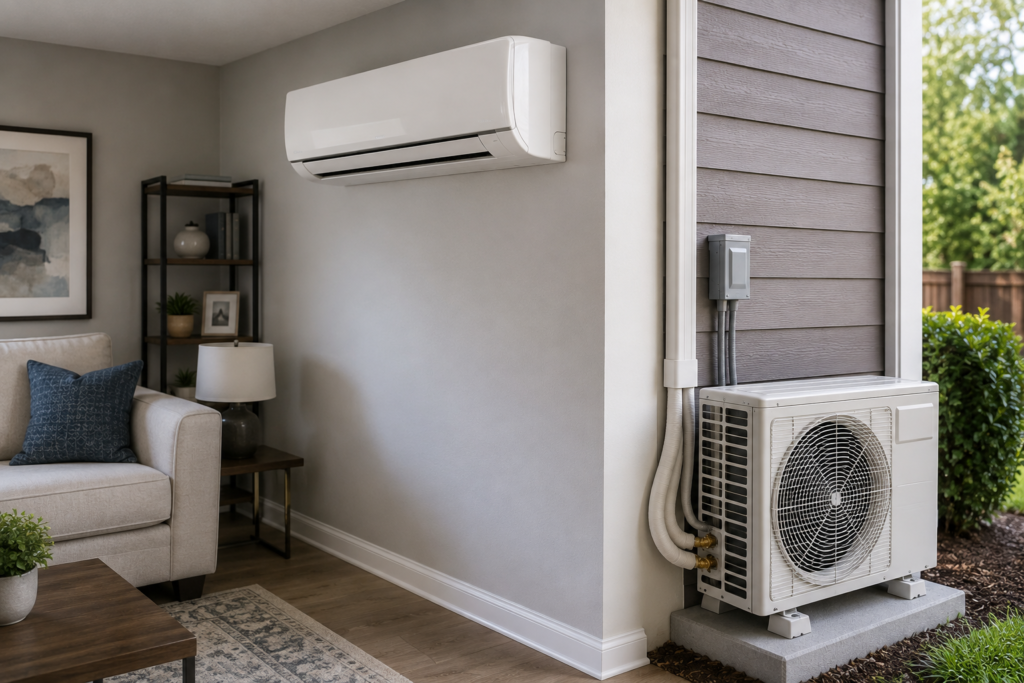
Central air and ductless systems have different installation requirements. Central AC becomes particularly practical when the home already contains suitable ductwork. Ductless mini split installation avoids a conventional whole home duct network but requires individual indoor units for selected rooms or zones.
A single zone ductless installation can cost less than adding central air and complete new ductwork, while a multi zone ductless project can cost considerably more as the number of indoor units increases. Homeowners without ducts should compare the complete central and ductless project costs rather than equipment prices alone.
New AC Installation Versus Replacement Cost
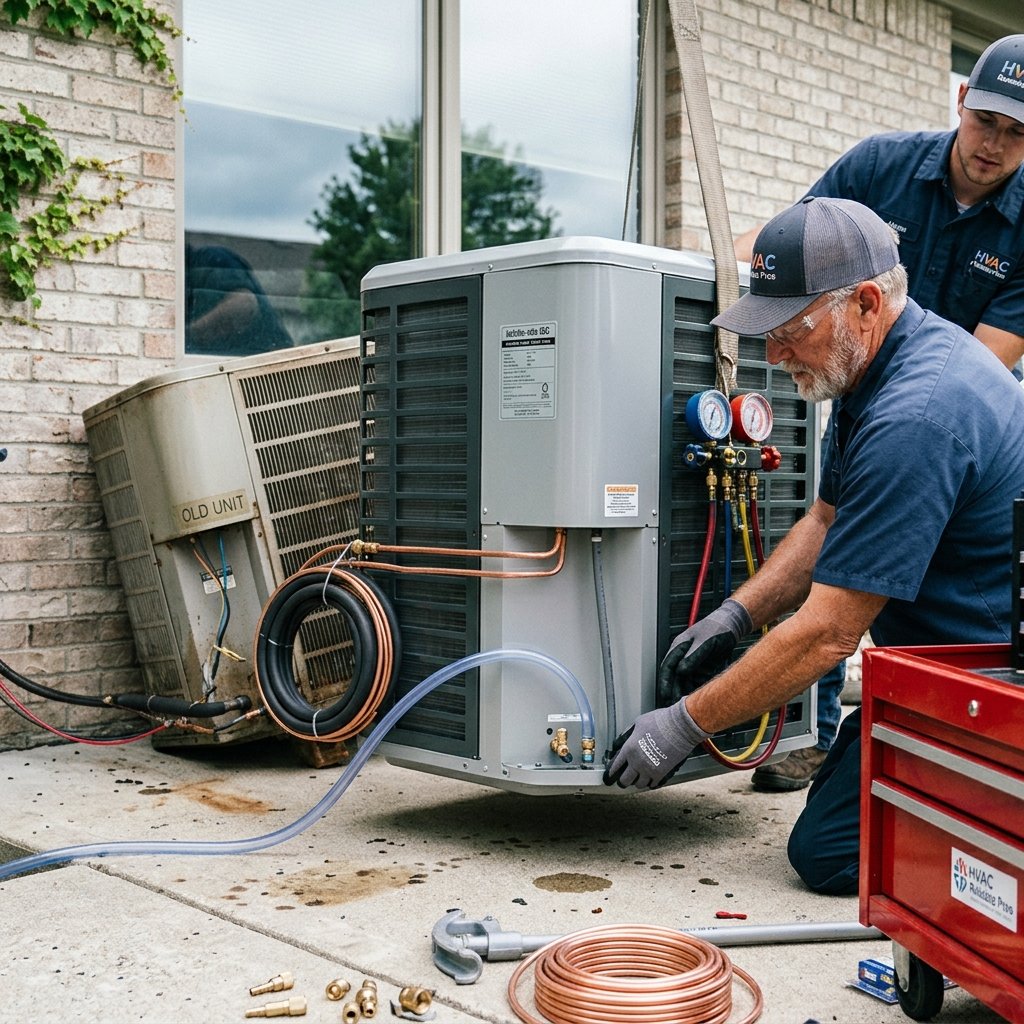
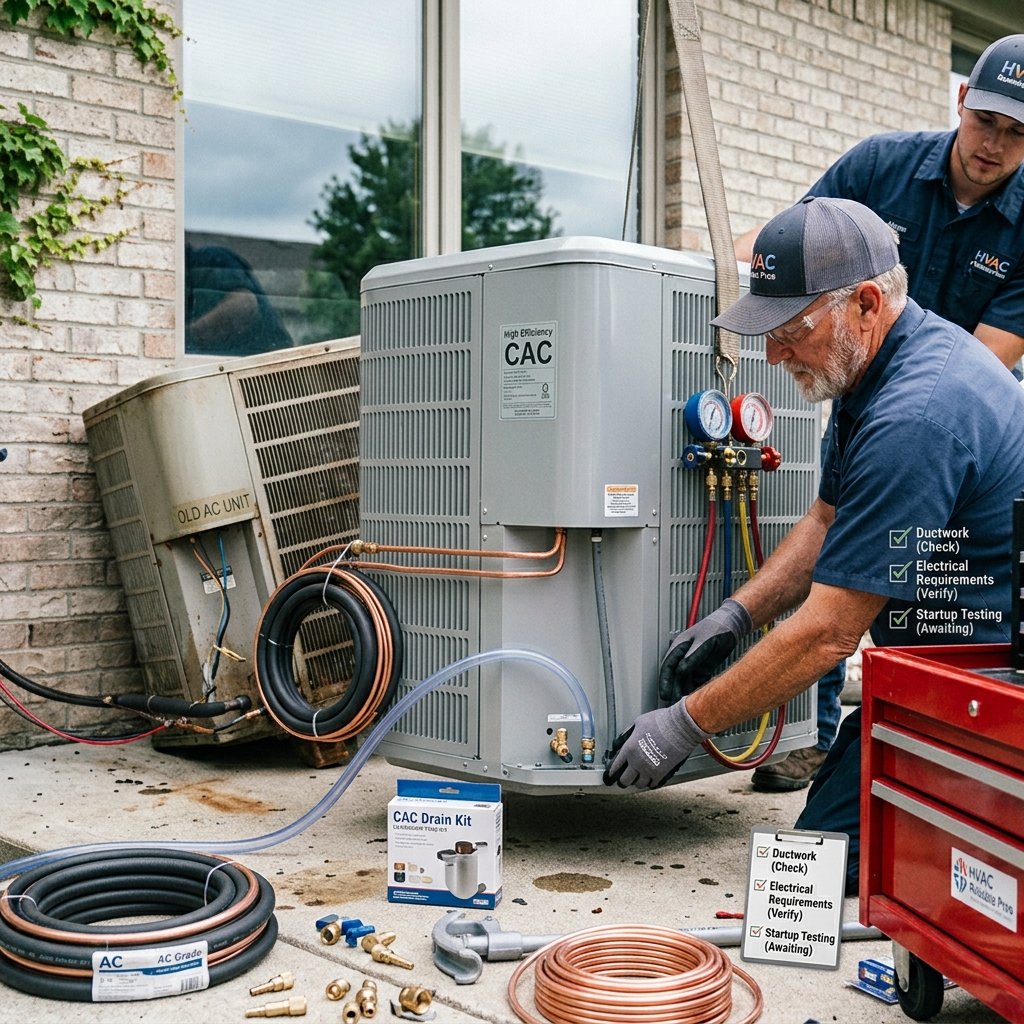
New installation can cost more than a straightforward replacement when the property lacks cooling infrastructure. Replacement starts with existing equipment locations, electrical connections, refrigerant routes, controls, and often ductwork, so a first time central air installation can require several new components.
A typical AC replacement can cost around $6,000, although equipment type and project conditions can move the price from a few thousand dollars to more than $10,000. Homeowners replacing existing cooling equipment can review our AC replacement near me guide for replacement specific information.